
Planting Seeds: How the Ruppert Family Cultivates Family Philanthropy Across Generations
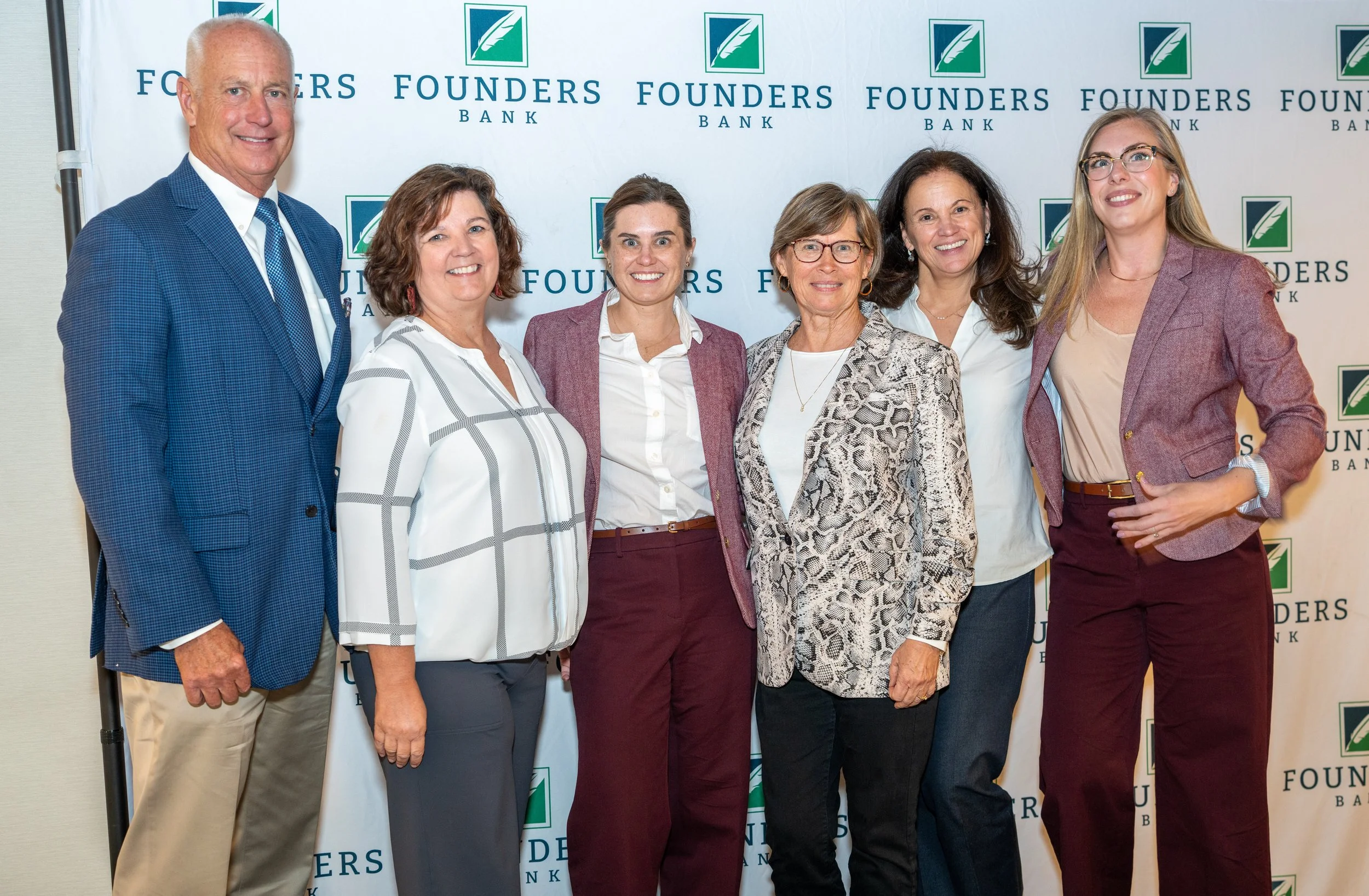
From left to right: Craig Ruppert, Lisa Horton (Ruppert Grows Community Engagement), Charlotte McGehee, Pat Ruppert, Sara McCartney (Ruppert Grows CFO), and Jamie England (Ruppert Grows President) at a special Lunch & Learn event hosted by Founders Bank where the Ruppert family shared insights on multigenerational giving.
The Community Foundation’s “Leaders of the Future” series highlights individuals and organizations who inspire us to look towards a brighter future for Greater Washington.
This month, we are excited to highlight Craig & Pat Ruppert, long-time fundholders and friends of The Community Foundation who have built an incredible legacy of family philanthropy in Montgomery County.
Planting seeds is something that Craig & Pat Ruppert are intimately familiar with. As the founder of one of the largest landscaping companies on the East coast, the Rupperts have brought beauty and greenery to homes and businesses across the region for more than 50 years.
"Success isn’t just about cutting grass; it’s about taking care of people,” Craig shared.
"By treating employees with respect and giving them opportunities to grow, we were able to grow our business and strengthen our community, our family, and our legacy in ways we never could have imagined.”
Finding Purpose Through Personal Connection
Craig's journey into philanthropy began with a phone call from a friend asking him to volunteer at an Easterseals telethon in the early 1990s. Years later, when offered a seat on the organization's board, he visited the Easterseals Child Development Center in Columbia Heights and experienced an unexpected moment of recognition.
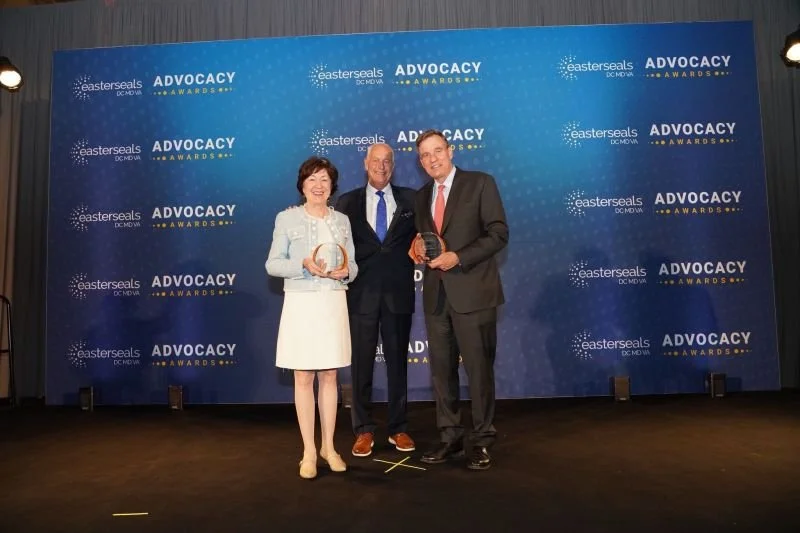
Craig Ruppert presents the Legislative Advocate Awards at Easterseals 20th Anniversary Event.
The building looked oddly familiar. After consulting with his mother, Craig realized he had visited this same facility as a child, accompanying her when she dropped off his youngest sister, Colleen, who has Down syndrome, for early education programming.
"Colleen thrived there," Craig recalls. The memory of how Easterseals had supported his sister transformed his relationship with the organization – and with philanthropy, by-and-large. In 2008, he was honored by The Community Foundation as the Montgomery County Philanthropist of the Year.
Meanwhile, Pat Ruppert also established herself as an advocate for change – particularly for seniors in hospice care, youth pursuing higher education, and young children.
After teaching philosophy at Montgomery College for 13 years, she joined the Montgomery County Advisory Board at The Community Foundation – where she was instrumental at supporting child learning in the aftermath of the COVID pandemic.
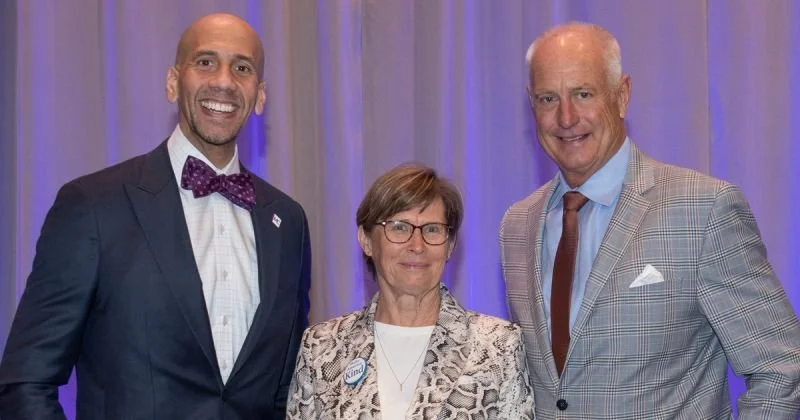
Pat & Craig Ruppert at an event for Montgomery College.
"I was worried about my grandkids and their school system," Pat remembers. "Then I realized that our family had so many benefits—and they're shell-shocked. What happens for single families?"
That concern sparked action. Pat reached out to Anna Hargrave, Executive Director for Montgomery County at The Community Foundation to learn what was being done to support working families. It was through that connection that she learned about the Children’s Opportunity Fund and the emerging Equity Hubs initiative—safe learning spaces organized in partnership with Montgomery County Public Schools to support students from low-income households. Recognizing the importance of this initiative, Pat and Craig stepped up to help through their donor-advised fund at The Community Foundation.
Their support was instrumental in a remarkable community response. The Children's Opportunity Fund raised over $1 million in private philanthropy plus $7.9 in public resources, enabling Equity Hubs to serve 1,500 students across 70 sites throughout the pandemic. The Rupperts understood what many families needed most: a safe place for children to learn when traditional structures had collapsed.
Spreading Philanthropy At Home & In The Workplace
But perhaps even more impactful than their personal philanthropy is the way that Craig & Pat have gone out of their way to plant the seeds of philanthropy in their home and across their community.
Since 2003, Ruppert Companies has donated 5 percent of profits before taxes annually to charity—approximately $300,000 each year in the early days, growing substantially as the company expanded.
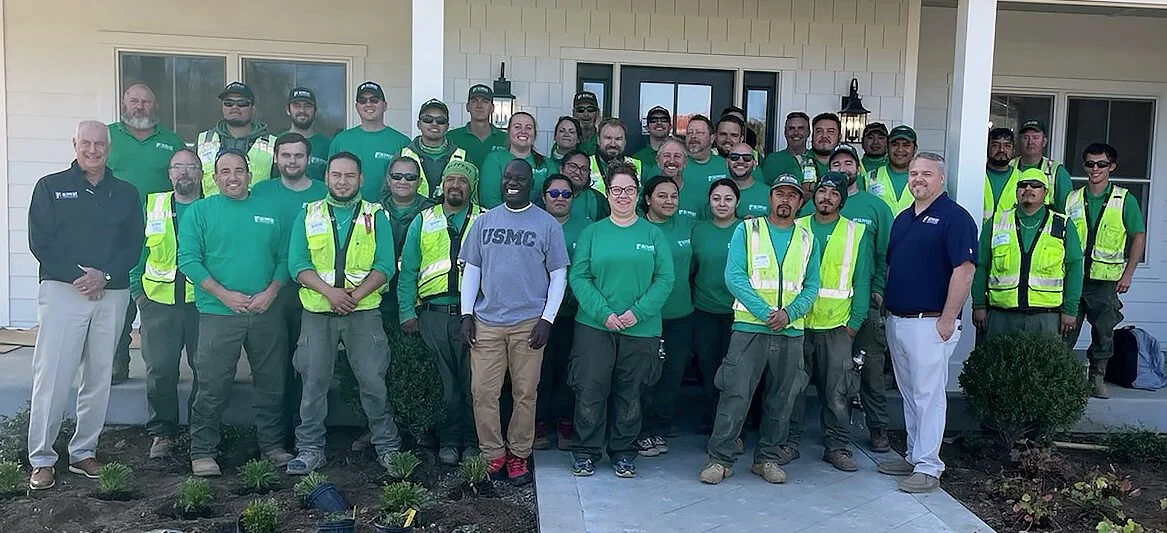
Ruppert Landscapes partners with HeroHomes to create a forever home for a wounded veteran - one of many projects recommended through employee connections.
The company encouraged employees to nominate causes they cared about which not only distributed giving widely across the community, it also built a strong company culture that empowered employees to find ways to give where they live.
"Employees want to be part of a company that shares," Craig notes. "Being charitable doesn't cost that much—it comes back in unmeasured ways, including better customer and employee commitment."
Meanwhile, Craig and Pat found ways to apply similar principles as parents, raising their four children. Their daughter, Charlotte McGehee has fond memories of learning about giving back while building homes on a mission trip to Jamaica—an annual tradition and rite of passage that the Ruppert children would embark on each summer—on the condition that they share what they learned with someone else when they got back.
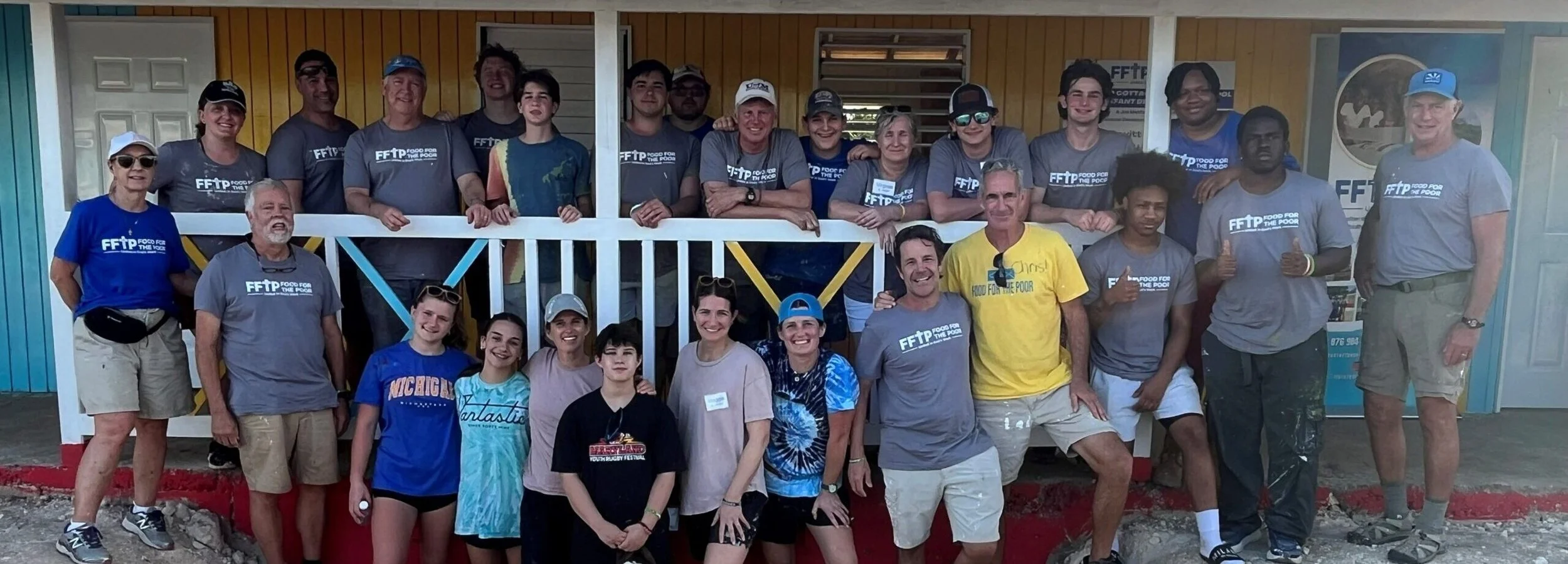
The Rupperts on a mission trip with Food for the Poor in Jamaica.
“I learned that I'm not there to be a hero," Charlotte reflected. "I am getting an opportunity to be a part of something bigger, to meet other people, and learn from them."
Today, Charlotte is integrally involved with the Ruppert Family Foundation – as are several of her other siblings. Together they are continuing to find new and personal ways to follow Craig & Pat’s example and give back to their communities.
Looking to the Future – Setting the Stage for the Next Generation
Pat thinks about their giving with a multi-generational, century-long view. The family divides their budget into two categories: 70 percent for "historic giving" to organizations they've long supported, and 30 percent for "next generation giving" to causes that will carry forward.
The family takes a "yes-and" approach to generational giving. "My mom and dad have organizations they've connected with—we want to support them, but also think about the organizations that will support my generation and the next generation," Charlotte explains.
"If you want to preserve family wealth through the generations, you should have stronger philanthropy," Pat observes. "Flexibility is very important. The cast of characters will change, but the values will stay the same."
Pat has gotten creative about engaging the youngest family members. A few years ago, she invited all 11 of her grandchildren, all under the age of 12, to her house and asked them what causes they cared about. Pat then labeled several glass jars with each cause, gave each child a few dollar bills, and had them put their money towards the causes they wanted to support.
"At the end of the day, the jar that got the most money was helping three-legged cats," Pat laughs.
Over the years, the Ruppert grandchildren have since gravitated towards weightier causes including anti-bullying and supporting child refugees—demonstrating that even young children can engage meaningfully with philanthropy.
"We want our kids and grandkids to be happy and successful in life," Craig reflects. "Our job is to set the table and give them the tools they need to make it their own.”
Advice for Aspiring Family Philanthropists
Looking back on their journey, the Rupperts say the best advice they can offer for those considering their own philanthropic legacy is a simple one: start where you are.
"You can start right now with that culture of giving," Pat emphasizes. "If you don't have children, you can adopt others—literally or through your giving."
"Don't let setting up a foundation be a barrier to entry," Pat adds, noting they started with a donor-advised fund at The Community Foundation before establishing their family foundation. "The Community Foundation is an incredible partner and resource to take your philanthropy to the next level."
“Start small,” Charlotte adds. “Whenever you're checking out at a grocery store and it asks you if you want to give, just say yes. My parents taught me to do that and it's helped me learn more about the organizations they're supporting and it's helped me practice. Just say yes."
“You don't need to have everything figured out to start giving. You just need to care enough to begin.”