

Spotlight – Jill Brawner – “It’s My Turn”: How Thrive Prince George’s Empowers Caregivers to Invest in Themselves
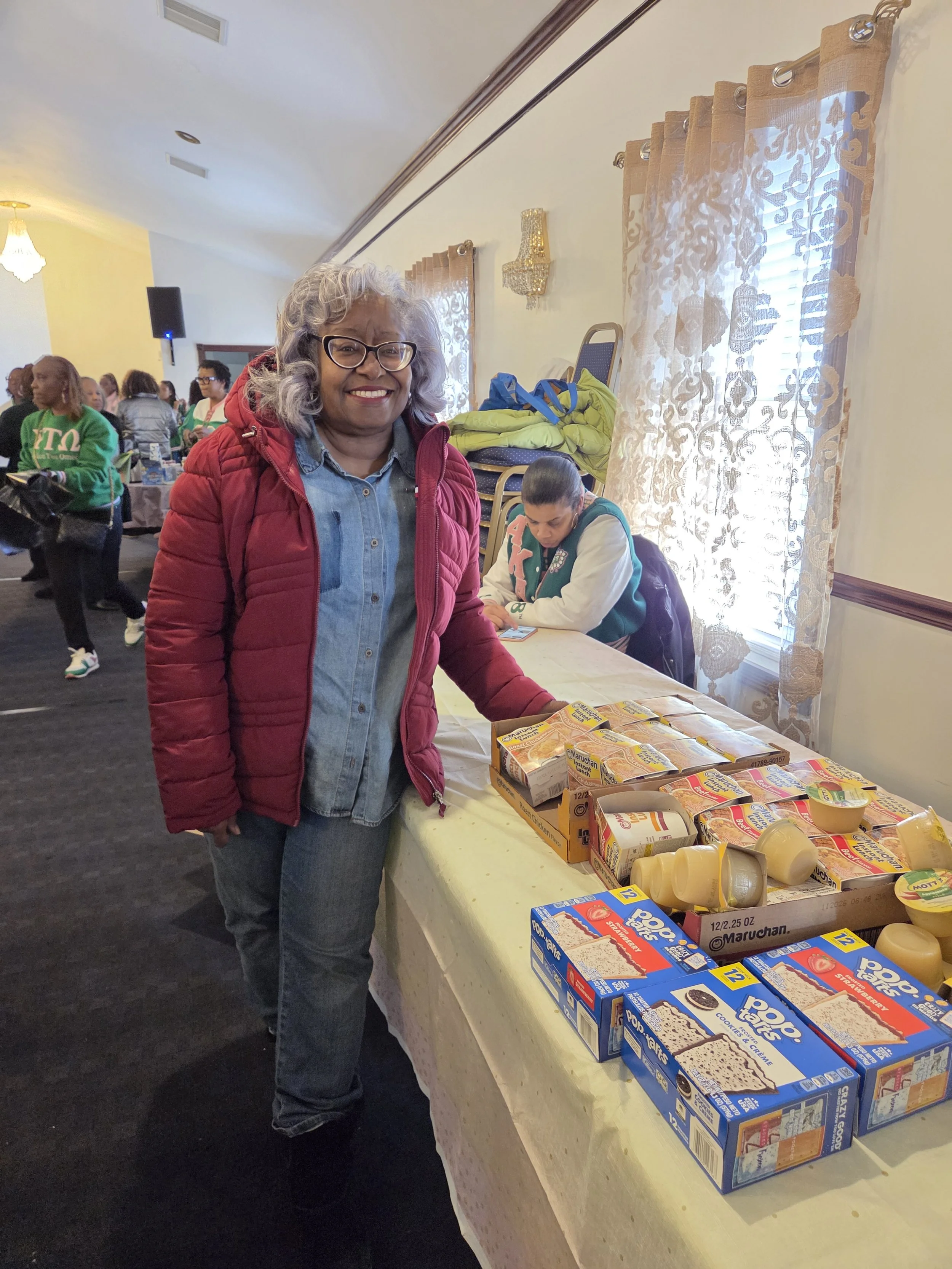
For most of her life, Jill Brawner has been the person other people lean on.
A retired educator with 28 years in Prince George's County and Montgomery County public schools, Jill has always shown up — for her students, her family, her church, her sorority. When her church in Hyattsville needed volunteers to bag groceries for neighbors in Adelphi, Jill was there with her time and a modest monthly donation she could barely afford. When family members needed help, she found a way to give it, even when she wasn't sure she could.
Giving, for Jill, has never been a question. It's simply who she is.
But somewhere along the way — through a devastating condo fire that displaced her for four years, the onset of COVID, and the gradual accumulation of debt — Jill had let her own foundation quietly erode. By the time she heard about Thrive Prince George's, she hadn't taken a vacation in nearly a decade. She had no savings to speak of.
“I could feel myself sinking,” she says. “Thrive gave me a wonderful lifeline.”
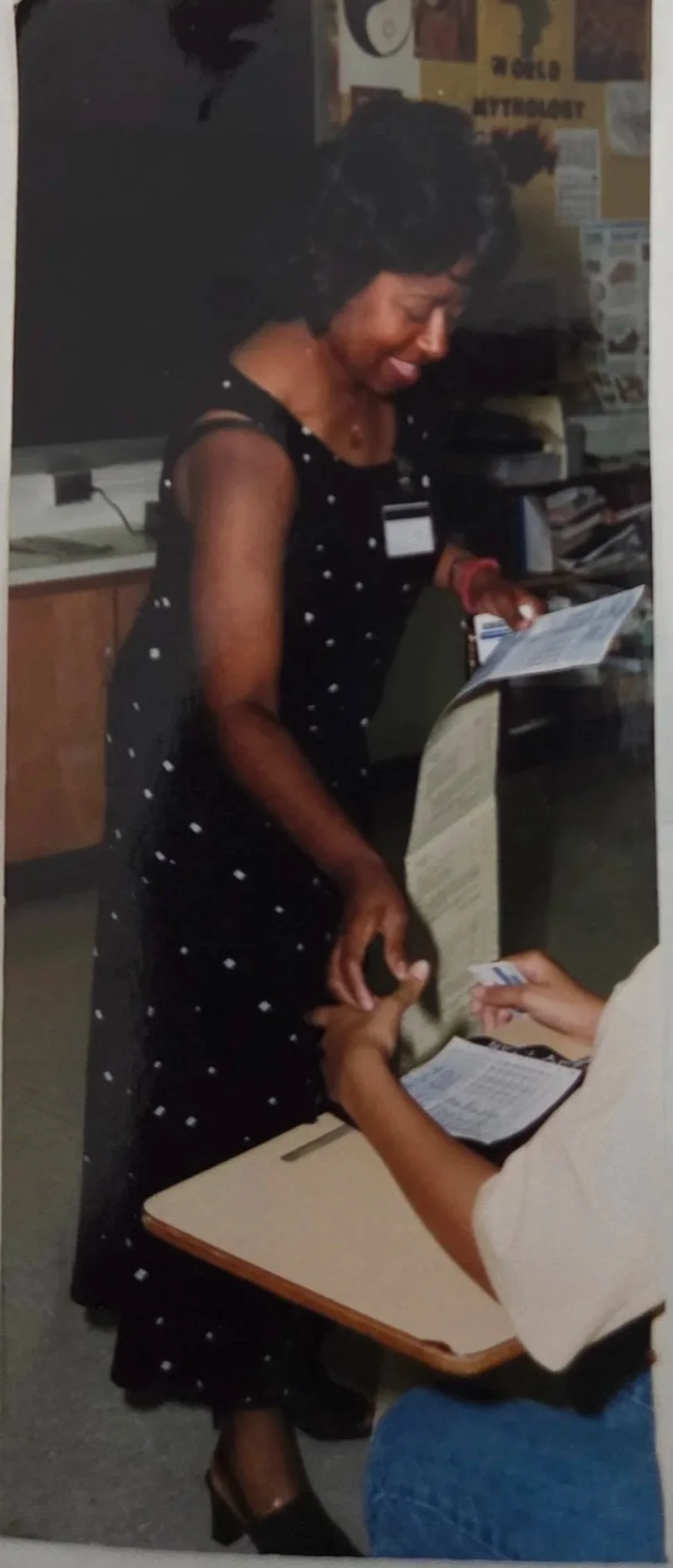
Jill Brawner in her classroom at Largo High School.
A Life Spent Showing Up for Others
Jill has lived in Prince George's County since fifth grade, when her mother moved the family from Southeast DC to Oxon Hill in the aftermath of the 1968 riots following the assassination of Dr. Martin Luther King.
After graduating from Oxon Hill High School, Jill attended Bowie State and then began a 25-year career teaching High School English with Prince George’s County Public Schools.
“I love teaching,” Jill explained. “Ninth graders can be tough sometimes, but with the right attitude and the right amount of love and firmness, it can be extremely rewarding.”
Then in 2013, a fire tore through her condo building the day after Christmas. Twenty-four families were displaced, and Jill was among them — between renovations, insurance disputes, and legal delays, she wouldn't be back in her home for nearly four years.
“It was like a snowball effect,” Jill recalled. “Things really started going downhill after that.”
Jill moved in with her sister in nearby Anne Arundel County. However, not long after moving in, Jill’s sister became ill, forcing Jill to leave her teaching job to help take care of her nieces and nephew, while also going into debt to help with her sister’s medical expenses.
“I was without funds for a while,” she says. “I had enough to pay my car note and car insurance, but everything else fell by the wayside.”
Before long, she had accrued close to $26,000 in credit card debt.
Determined to dig herself out of the hole, Jill began substitute teaching in neighboring Montgomery County. She also picked up part-time work at the Warner Theatre and, later, at Nationals Park — and over time was able to work herself out of debt.
It was around this time that a neighbor told Jill about Thrive Prince George’s – a 2 year guaranteed income pilot that would provide $800 a month for a limited number of seniors. “I still remember the day I got the email that said I was accepted,” she says. “I couldn't believe it. I felt so blessed.”
Rebuilding and Feathering the Nest
The guaranteed income payments gave Jill something she hadn't had in years: room to breathe — and, for the first time in a long time, the ability to help others without hurting herself.

Jill volunteering at a food distribution at her church in Hyattsville
When her brother was diagnosed with MS in 2024, Jill was able to contribute to his care expenses without going into debt to do it. When her sister needed support, Jill could offer it while still setting something aside for herself.
“I said to her: I got into this program, I can help you — but I got to save half for me,” she recalls.
She began rebuilding a nest egg and started saving toward long-overdue condo renovations. “I haven't had one in years,” she says of her savings. “But miracles happen all the time.”
But it was the financial coaching component — sessions led by coach Robert Giron — that helped her understand why the nest egg had always felt so hard to hold on to.
Before working with Robert, Jill had been afraid to even look at her credit score. “I thought it was in the dumps,” she says. Instead of judgment, she found guidance: how to write letters to creditors, how to structure her budget, how to prioritize bills at the beginning of the month rather than the last possible day.
More importantly, the coaching helped her see patterns she'd never quite examined. She recognized, for instance, that she'd sometimes make purchases — a small treat, an impulse buy — as a way of managing stress. “Before I would purchase something to make me feel better,” she says. “The financial empowerment sessions taught me how to prioritize and wait.”
She also came to name something she'd always known about herself but hadn't fully confronted: her instinct to give — to family, to church, to community — sometimes came at the cost of her own stability. “One of my problems with saving that Thrive money was that I wanted to take care of other people,” she says.
The coaching, combined with conversations among fellow participants, helped shift that. “We gotta put ourselves first,” she says. “It's really hard. But it's about feathering your nest so you learn how to live better while you're taking care of others — putting yourself equal, so you're not self-sacrificing too much.”
Giving Back from a Steadier Place
When asked about the impact that programs like Thrive could have, Jill doesn’t hesitate to point out the countless working seniors – caregivers like her – that she sees in her community on a daily basis: the seniors working extra shifts at the grocery store, the baseball stadium, or the late-night CVS, stretching fixed incomes across rising costs. Jill knows the texture of financial precarity intimately, and she knows that the people most likely to need help are sometimes the least likely to ask for it.
“To accept that helping hand can be hard sometimes,” she says, recalling people she knew who were eligible for Thrive but wouldn't apply — “I don't believe I deserve this. I don't need this.”
She pauses. “I thought I was doing OK. But I didn't look at my need that deeply.”
One of her biggest takeaways from the program is simpler than any budgeting strategy: "I'm not alone. Sometimes I can get so bogged down, and there are people out there to help you."
Jill says she hopes programs like Thrive continue — and that more caregivers in particular find their way to them. “When you're a caregiver, it can play on you,” she says. “Programs like Thrive can give seniors breathing space.”
As for herself: she has a savings account that's actually growing. She bought a new laptop. She's planning condo renovations. And she's still giving — to her church, her sorority, her community — just from a steadier place.
“Right now,” she says, “it's my turn.”