
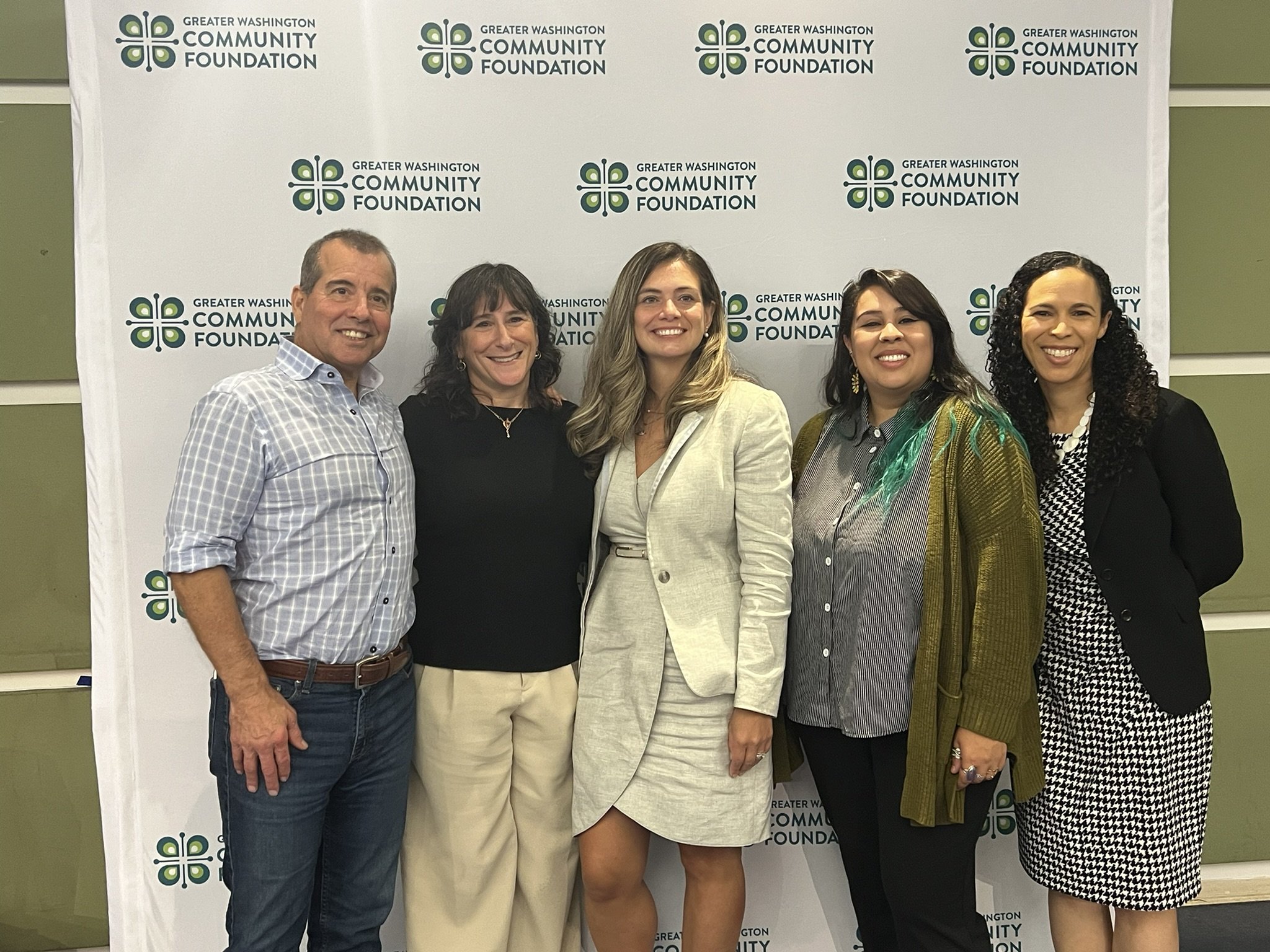
On October 15, donors, partners, friends, and community leaders gathered for a conversation about how to stand with our immigrant neighbors in Montgomery County.
“Many people don’t realize that immigrants play an integral role in the culture, economy, and fabric of life for everyone who calls Montgomery County home,” shared Anna Hargrave, Executive Director for Montgomery County at the Greater Washington Community Foundation.
Montgomery County boasts the largest immigrant population in the state of Maryland and one of the highest concentrations in the region. Roughly a third of Montgomery County residents (more than 330,000 people) were born outside of the United States. Immigrants in Montgomery County are also major contributors to the local and regional economy, paying $5 billion in taxes (annually), commanding $10.9 billion in spending power, and creating more than 25,000 small businesses and entrepreneurial enterprises.
They also have been among the hardest hit, as federal actions and increased volatility around immigration enforcement have sowed fear, mistrust, and uncertainty in one of the region’s largest communities.
“Our communities are scared,” shared Diego Uriburu, Executive Director of Identity, a nonprofit that provides services for over 10,000 youth and families in Montgomery County – many of whom come from immigrant backgrounds. Over the past two years, the organization has seen a dramatic increase in the scope and scale of needs from the community they serve.
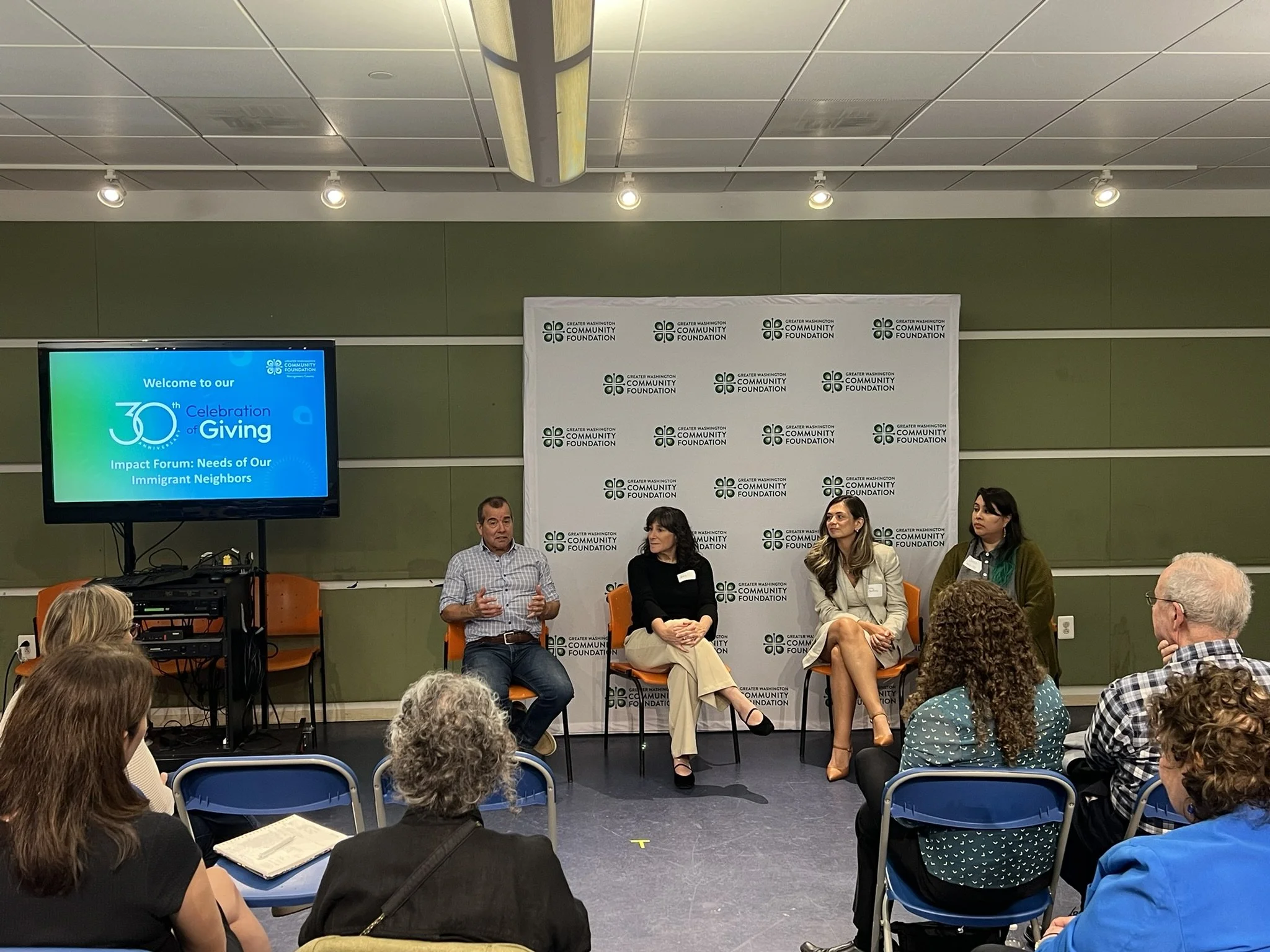
“We heard stories of parents who lost their jobs because they were too afraid to leave their homes,” Diego shared. “Children who would come home from school and find out their parents had been detained. Other kids were too afraid to go to school because of what might happen while they were gone.”
Diego shared the story of one young man named ‘Carlos’ (name has been changed). Late last year, Carlos accompanied his mother to a routine immigration check-in. While waiting outside the courtroom, an official came outside with his little brother and told him that his mother was being detained. Carlos and his three younger brothers didn’t hear from her for nearly 24 hours.
Carlos spent the next few weeks at home, splitting his time between consoling his younger brothers and frantically calling government agencies to try and get information about his mother’s case. After the first week, he lost his job because there was no one else to take care of his younger brothers during the day.
Almost a year later, Carlos’ mother remains in detention.
“Stories like ‘Carlos’ are unfortunately becoming far too common in Montgomery County,” Diego shared. “These incidents have far-reaching consequences – not only for the families of those involved, but also the wider community.”
In late 2025, Identity partnered with the University of Maryland to document the experiences of immigrant families. What they found reflected many unsettling trends that have been unfolding across the country over the past two years including lower high school enrollment rates, economic challenges such as job loss, rising cases of food insecurity, and an uptick in housing discrimination cases and evictions among migrant families.
“Everyone – even if they have papers – feels fear and worry about going out; about going to work or going to school,” one youth shared. “So many students are staying home, and parents are staying home without going to work.”
“My kids are always saying, ‘Mommy, they’re going to deport you. Who are we going to stay with?’” one parent shared. “I can see that they are very afraid.”
Stepping up to Meet the Moment
To help meet these needs, in 2025, Montgomery County launched a system of coordinated referrals and case management, known as the Lighthouse Initiative, to support individuals and families navigating challenges related to immigration status.
The initiative – which is managed by Identity in collaboration with several immigrant serving organizations across the county – connects families to a wide range of essential services including food, housing, workforce development, healthcare, education, and immigration legal assistance, including "know your rights" information and legal consultation.
“As a local government agency, we recognize the unique challenges that our nonprofit parters and immigrant communities are facing right now,” shared Luisa Cardona, Assistant Chief Administrative Officer with the Montgomery County Executive’s Office. “We want to be a partner in filling some of these gaps and amplify investments in our immigrant community.”
Thanks to the Lighthouse partners, Carlos was connected to resources to help him pay rent and obtain the title to his mother’s car that she left behind.
He also received assistance from the Montgomery County Immigrants Rights Collective (MoCo IRC), a mutual aid collective run by volunteers and community members to protect and empower immigrant communities.
Since February of last year, the group has been on the front lines of supporting immigrant families by providing assistance to detained immigrants and their families through food deliveries, accompanying immigrants to school and medical appointments, and a network of vetted pro and low bono attorneys.
Both the County leaders and MoCo IRC volunteers recognize that support for detained immigrants and their families – like Carlos - represents one of the biggest gaps in the current social safety net, as newly imposed restrictions around Public Charge, SNAP benefits, and Medicaid have placed those families in dire financial circumstances.
“What is happening in our communities affects all of us,” Jess Cruz Serrano, a lead organizer with Montgomery Couty IRC shared. “There are very intentional narratives being put out that we should focus on ourselves, as individuals – but we believe in community resiliency – in looking out for our neighbors and making sure that all of us feel safe and supported in our neighborhoods. Because we never know who could be impacted next.”
How You Can Help
If you would like to support trusted nonprofits and grassroots efforts helping our immigrant neighbors, reach out to [email protected] for a customized list of recommendations. In the meantime, consider the panelists’ recommendations for how your time, talent, and treasure can make an impact.
Time
Local organizations are looking for people to help, and the needs are practical. For example, volunteers can help deliver groceries and diapers, drive neighbors to medical appointments, or help walk children to and from school.
For those who want to help spread awareness, we can connect you with local experts who can speak at your community groups, congregations, and workplaces about what families are experiencing and how neighbors can respond.
Talent
Even if time is limited, many people have knowledge, skills, and connections that can make a huge difference.
One example that was highlighted in Carlos’ case is the need for estate and family planning support. One of the most heart-breaking challenges for those who are detained and their families is navigating what happens to those who are left behind, including young adults and children, as well as any assets or small businesses that immigrants have worked hard to build.
Panelists encouraged guests to share what they learned with their own networks and, where possible, to connect the organizations working on the ground with colleagues, employers, and community leaders who may not yet know about the need.
Professionals such as attorneys, interpreters, and counselors may find that their expertise fills a gap and can make a huge difference.
Treasure
Financial support makes much of the work above possible. Through trusted partners, funding can help families stabilize in a crisis with short-term rent, food, and employment support as well as pool dollars to help pay for legal representation from vetted attorneys.
Panelists also invited donors to think flexibly about impact. Because needs shift quickly, they encouraged funders to avoid defining in advance what a “win” looks like and noted that small contributions made early can build on one another over time.
“Your support can make a huge difference,” shared Anna. “Not only in meeting families’ basic needs, but in building a Montgomery County community where immigrants will be supported, seen, heard, and welcome.”