


About the Health Equity Fund
The $95 million Health Equity Fund is designated to improve the health outcomes and health equity of residents of the District of Columbia. The historic fund is one of the largest philanthropic funds of any kind focused on community-based nonprofits that serve District residents and also the largest in The Community Foundation’s nearly 50-year history.
Given that 80 percent of DC’s health outcomes are driven by social, economic, and other factors, compared to just 20 percent by clinical care, the strategy for this fund is to use an economic mobility frame to address the root causes that are causing these challenges in the first place.
The COVID-19 pandemic further widened and amplified pre-existing inequities related to health, housing, education, food security, criminal justice, income, and employment. This fund offers a once-in-a-lifetime opportunity to catalyze systemic, lasting change by adopting an economic mobility lens to improve health equity and health outcomes in the District. Funds will be dedicated to closing gaps in healthcare as well as addressing social determinants of health (SDOH) that impact health outcomes including education, employment, income, housing, transportation, nutrition, environmental safety, medical care, culture and recreation, and more.
Health Equity Committee
The fund is governed by a seven-member Health Equity Committee in partnership with the Greater Washington Community Foundation, as stipulated by the Memorandum of Understanding Between the Government of the District of Columbia and GHMSI and Consent Order.
The committee consists of three members appointed by the Mayor (Lori Kaplan, Dr. Tollie Elliott, and Courtney R. Snowden), three appointed by GHMSI (Juan M. Jara, Wendell L. Johns, and Dr. Bryan O. Buckley, and one selected jointly by GHMSI and the Mayor (Nnemdi Elias, MD, MPH). Learn more about the Health Equity Committee members.
Together, the Community Foundation and Health Equity Committee are ensuring the Health Equity Fund is managed according to guidelines outlined in the Memorandum. The committee’s role includes developing the grantmaking strategy, approving a slate of proposed grant recipients, monitoring the fund's investments, ensuring compliance with HEF's governing policies, and reviewing all financial and program evaluation reports.
Committee Members
Chair: Dr. Tollie Elliott Sr., MD
Vice Chair: Wendell L. Johns
Dr. Bryan O. Buckley, DrPH, MPH, MBA, ACC
Dr. Nnemdi Elias, MD, MPH
Juan M. Jara
Lori Kaplan
Courtney R. Snowden
Grantmaking Strategy
In partnership with the Health Equity Committee, the Greater Washington Community Foundation developed the grantmaking strategy based on community and stakeholder engagement and an analysis of available data on the nonprofit landscape.
Mindful that health and wealth are inextricably connected, the fund will boldly invest in economic mobility in DC’s historically underinvested communities. The fund will be keenly focused on three catalytic opportunities for change:
Supporting new and established community practices and structures that foster economic mobility.
Advancing policy advocacy and systems change initiatives that address the social and structural determinants of health.
Seeding disruptive and innovative projects that model and trend toward health equity
Health Equity Fund Grant Rounds
-
In October 2022, The Community Foundation announced the inaugural grant round - $9.2 million in funding to 32 organizations
-
In June 2023, The Health Equity Fund announced $12.5 million to 14 nonprofits working in health advocacy, policy, and systems change initiatives to address the social and structural determinants of health.
https://www.thecommunityfoundation.org/news/the-faces-of-health-equity-meet-our-nonprofit-partners
-
Beginning in 2024, the Health Equity Fund’s third and largest round focused on funding new and innovative ‘demonstration projects’.
In an effort to promote coalition-building and sustainability, each project required collaborations between two or more organizations.
Announcing $26 Million in Health Equity Partnerships
2024 - 2025
2025-2026
BOSSTANK - DC Development Consortium (DCCDC) & National Bankers Association Foundation
Connecting Community & Capital - The Coalition & Local Initiatives Support Corporation (LISC) DC
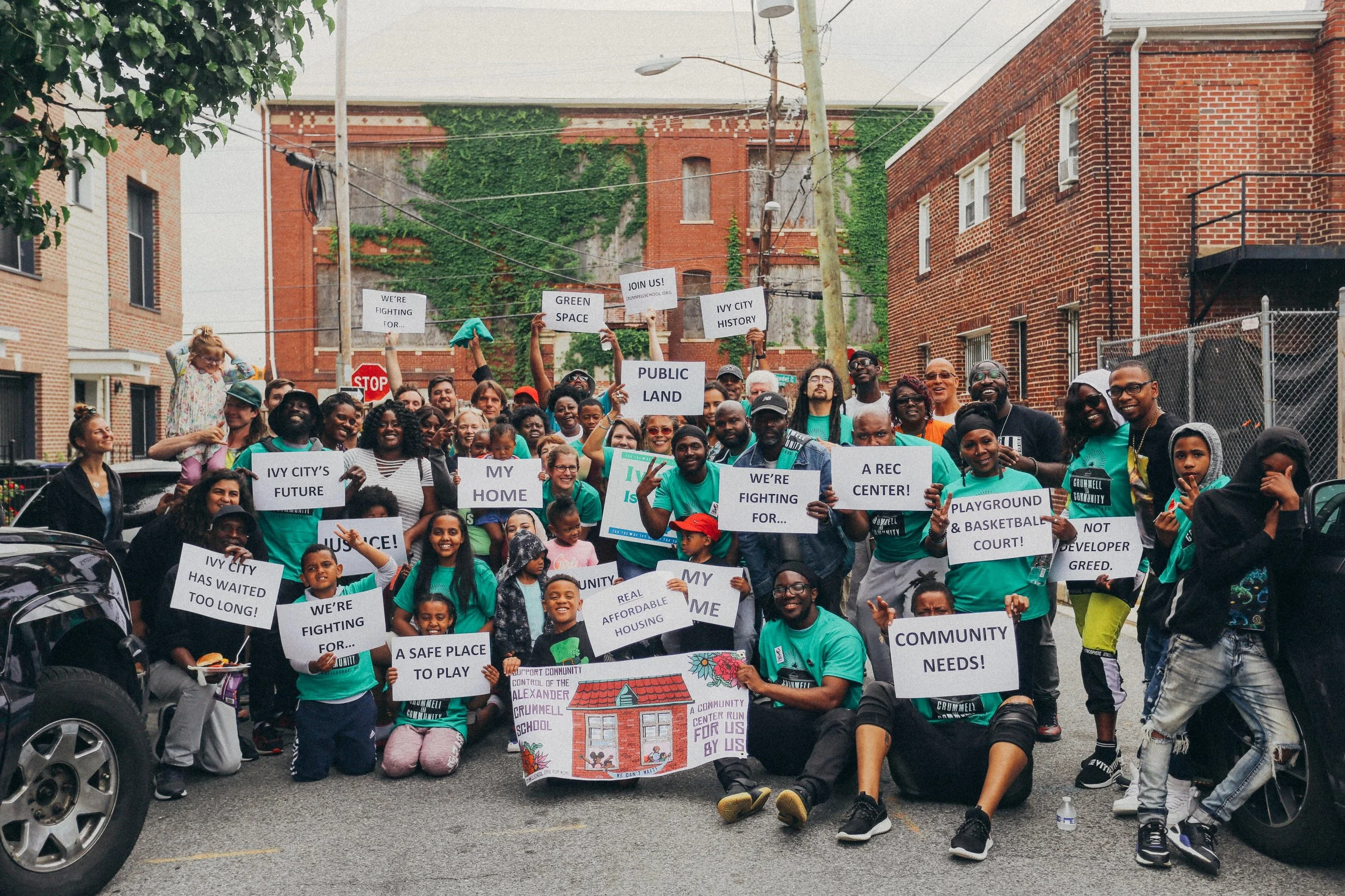
Ivy City Anti-Displacement Project - Empower DC & Douglass Community Land Trust
Cooperative Futures - Muslims for Just Futures & Beloved Community Incubator
-
In October 2024, The Health Equity Fund partnered with the DC Office of the Attorney General and the Office of Safety & Engagement (ONSE) to support nonprofits promoting community safety and violence prevention in DC.
-
In October 2024, The Community Foundation announced $10 million in multi-year funding to support 40 nonprofit partners working to foster economic mobility in DC.
The investment included organizations who are receiving funding from the Health Equity Fund for the first time, as well as a number of returning organizations who received funding through the inaugural Health Equity Fund grant round in September 2022. Returning partners were asked to share what they have learned and how our ongoing partnership supports the work they are doing in the community.
-
In December 2025, The Community Foundation announced more than $5.4 million in grants to support coalitions addressing health and housing challenges facing DC residents.
The grants were part of The Community Foundation's Community Resilience Initiative, which responded to unprecedented challenges facing the communities we serve by supporting the region's nonprofit sector to sustain critical services. The “Meeting the Moment Through Collective Action” grant round supported collaborative efforts to strengthen the region's health care safety net and expand services for residents experiencing homelessness.
These investments came at a critical time for the Greater Washington region, as significant cuts to Medicaid and other federal programs were set to take effect in 2026 – impacting services that more than a third of DC residents depend on for healthcare, social services, and community safety nets.
Learn More!

Strengthening Community Networks
Central to the Health Equity Fund's theory of change is building relational trust between the Fund and our grant partners. We create collaborative space and time within those partnerships, and learn together on frameworks such as Health in All Policies.
To support this work, we host a range of convenings, evaluation activities, and summits.

IDEA Summit
The Health Equity Fund regularly partners with the American Institutes for Research (AIR) to host Idea Summits - convenings where nonprofit partners can be in community together and discuss common goals to help inform and structure the ongoing evaluation process.
Nonprofit Partner Learning Series
The Health Equity Fund regularly hosts convenings around topics of interest related to the work of our nonprofit partners.
Topics for past convening have included guaranteed income, health policy and the DC Budget process.
Health Equity Summit
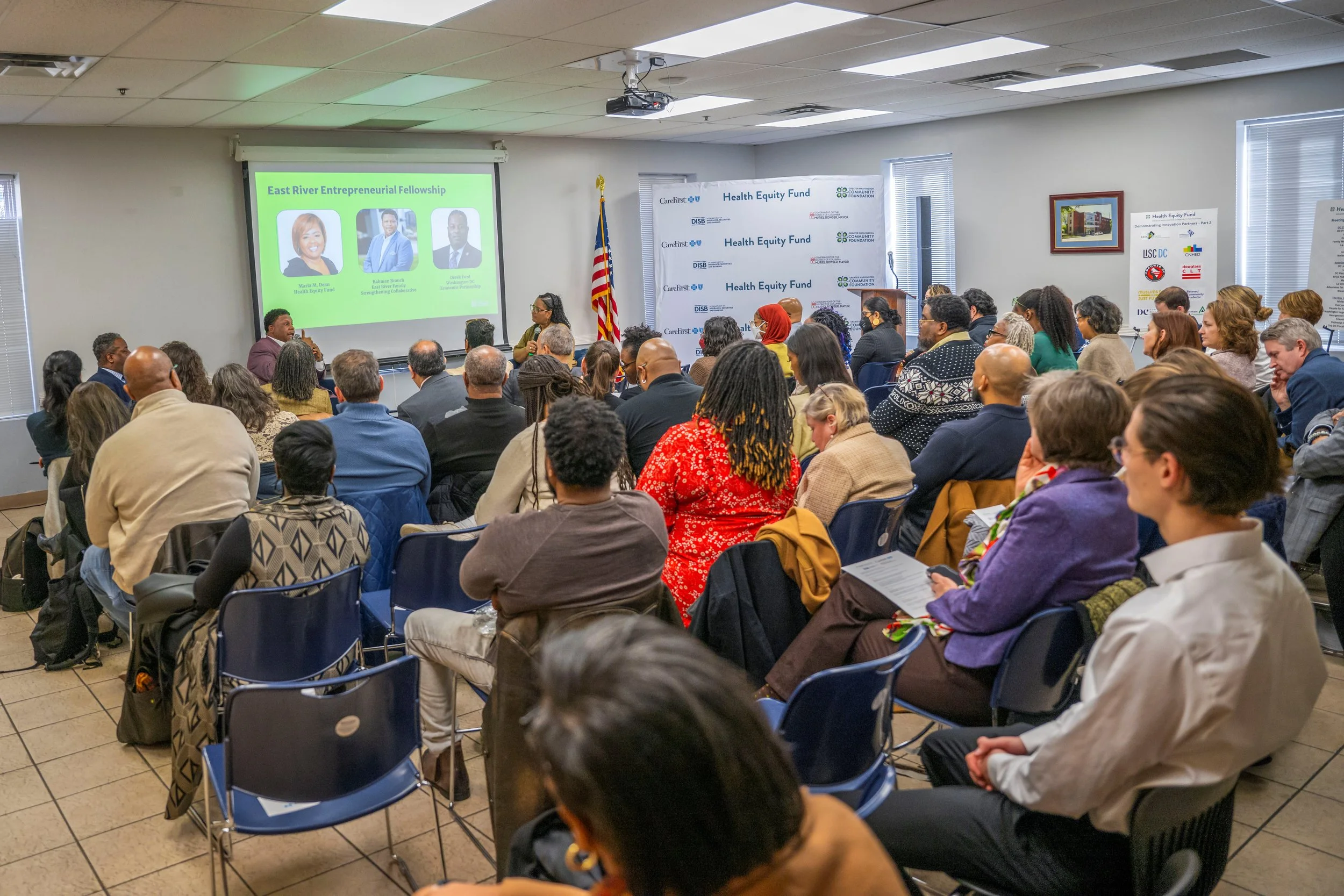
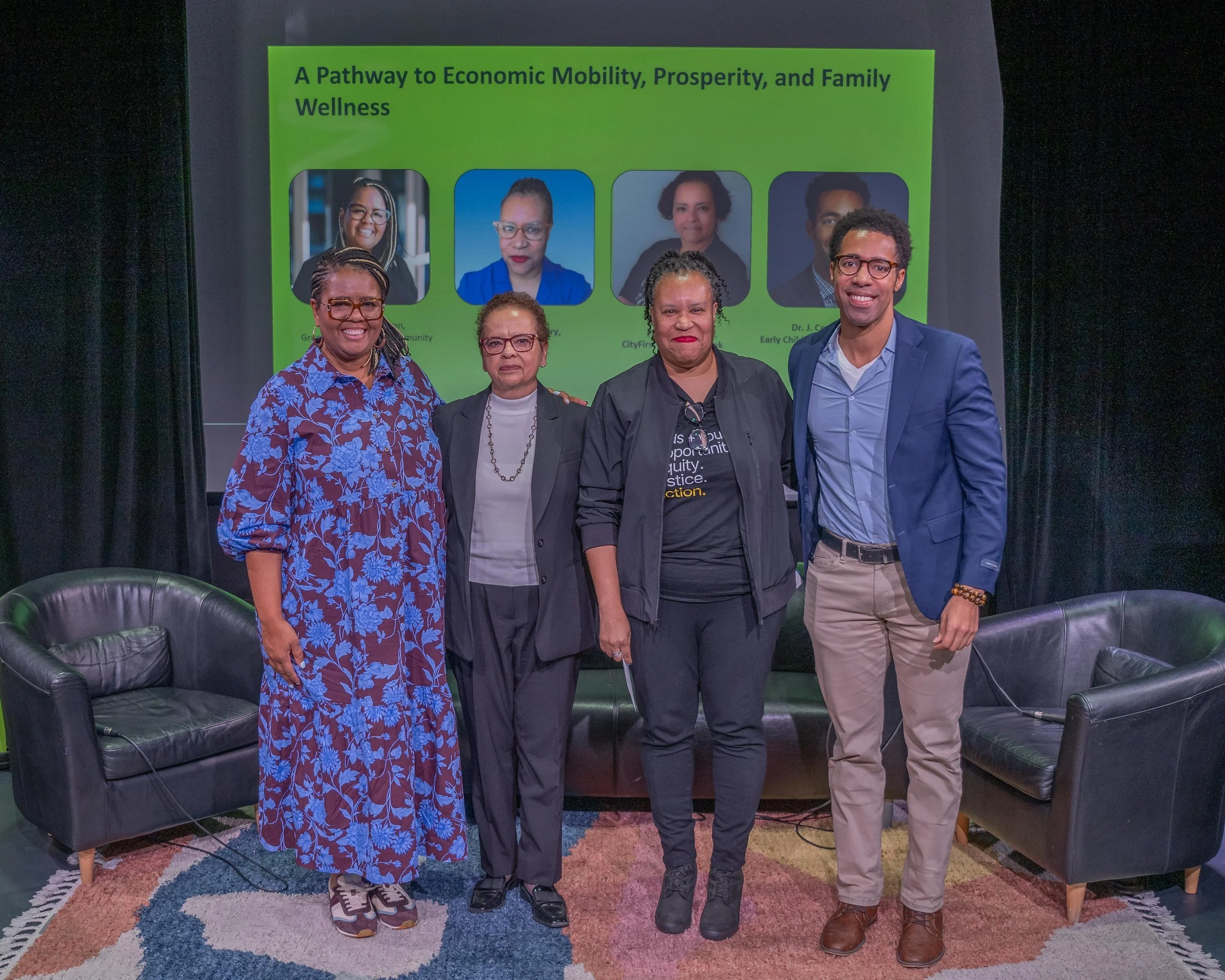
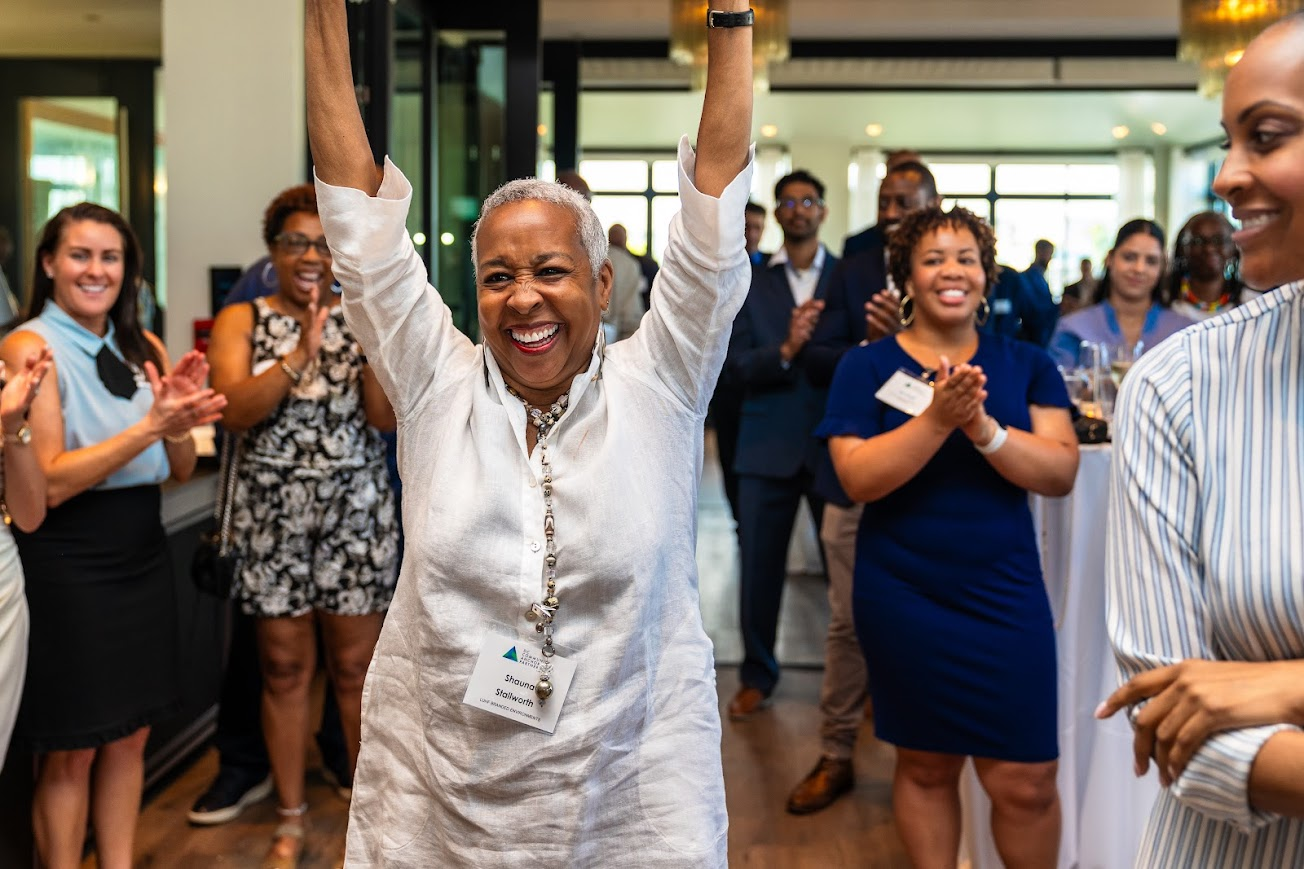
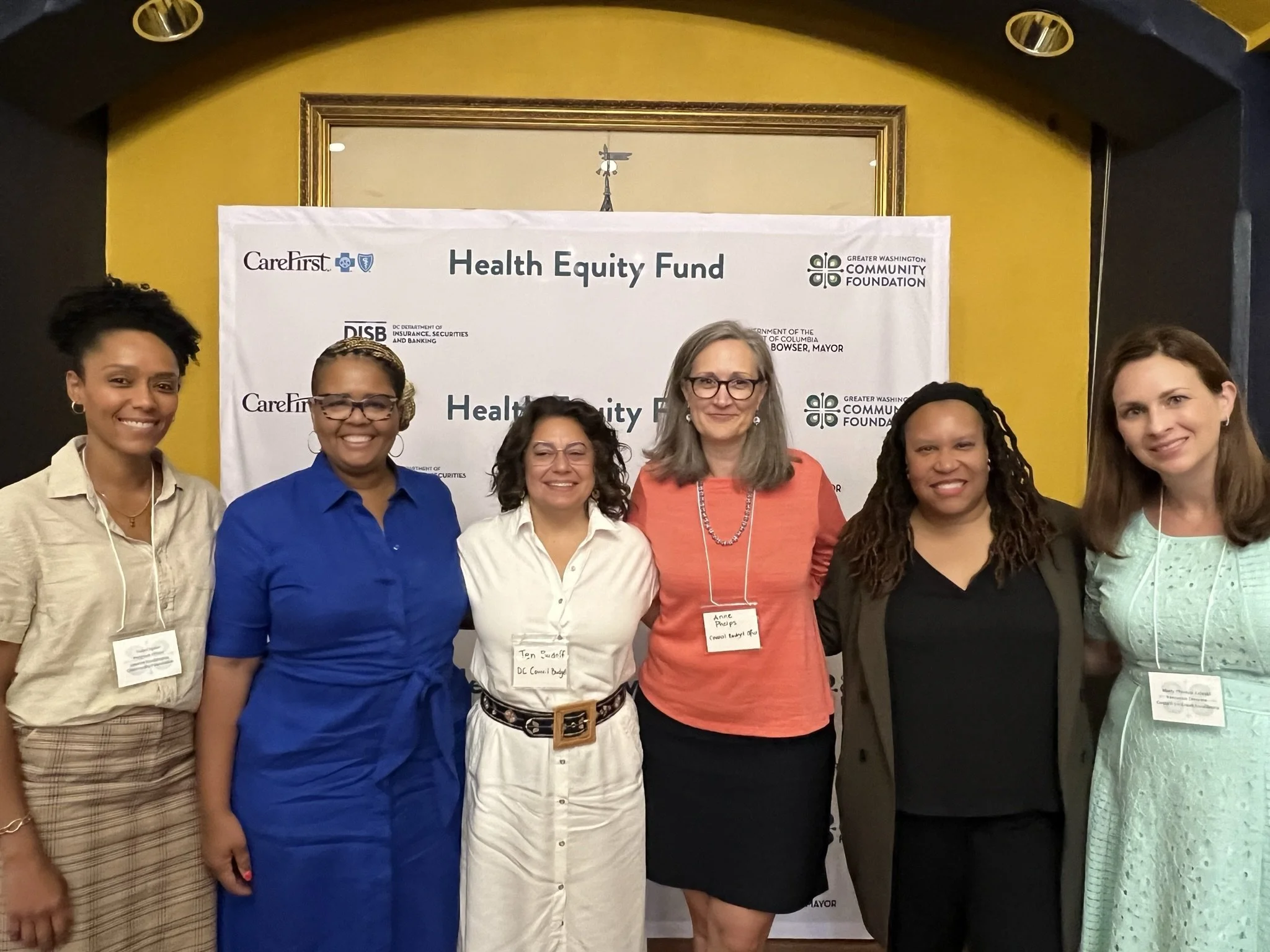
In April 2024, The Community Foundation hosted the 2024 Health Equity Summit at the beautiful Riverside Baptist Church in Southeast DC. The event brought together more than 200 changemakers from across the area for a day of music, speakers, and deep conversations around the pursuit of health equity, economic justice, and liberation in the Greater Washington region.
Two years later, The Community Foundation hosted the 2026 Health Equity Summit - this time at Sycamore & Oak in DC’s Ward 7 with more than 300 changemakers from across the region in attendance. The event celebrated the impact that the Health Equity Summit and it’s partners have made to date, as well as conversations around the impact of AI, the state of health equity, community wealth-building.
The Community Foundation’s Role and Strategic Vision
The Community Foundation was independently selected to manage the fund because of our track record of working with individual donors, businesses, and local government to manage effective community investments and create tangible, lasting change in our community. HEF goals align with our strategic vision of advancing economic justice, especially in our region’s historically underinvested neighborhoods.
The Community Foundation will oversee the day-to-day administration of all aspects of the charitable giving program, including standard fund administration, financial management, investment oversight, data management, human resources administration and compliance oversight, among other responsibilities.
In addition to its administrative role, The Community Foundation assisted in developing the grantmaking strategy based on its decades of experience investing $1.7 billion in the community through partnerships with thousands of high impact nonprofits – work that includes developing priorities for investments, creating RFPs, vetting applications, managing the review process, making selections, and processing grants.