
Greater Washington Community Foundation Celebrates $15.7 Million Investment in Transformative Health Equity Demonstration Projects
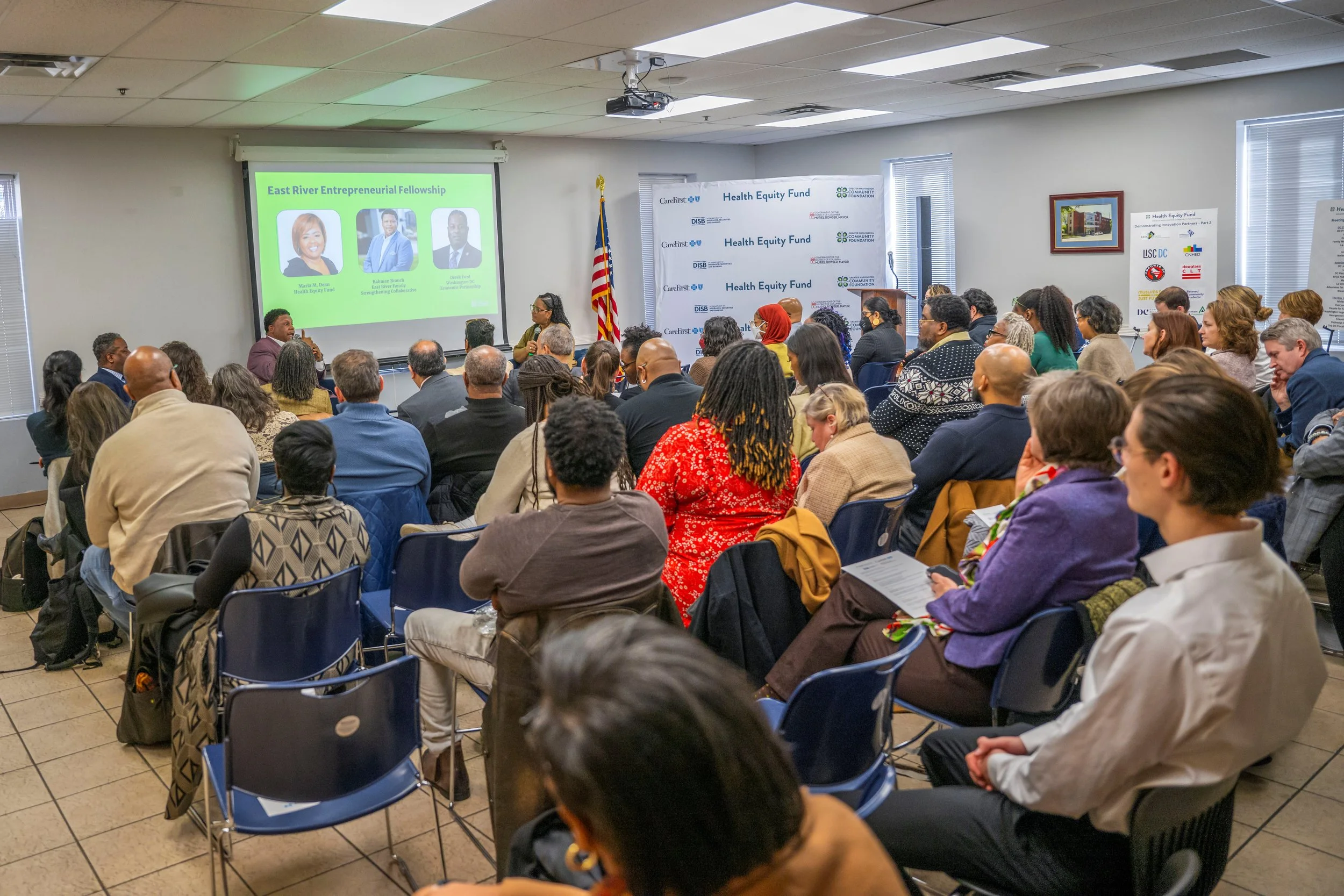
The Greater Washington Community Foundation's Health Equity Fund brought together partners, nonprofits, and community leaders to celebrate $15.7 million in multiyear investments for five demonstration projects focused on wealth building and economic opportunity across DC.
The announcement builds on the Fund's recent investment in collaborative efforts to strengthen the region – including $5.4 million to address urgent community needs around healthcare access and homelessness.
“We’re proud of the way this work has fostered meaningful collaboration and dialogue between our partners,” said Tonia Wellons, President and CEO of the Greater Washington Community Foundation. “These investments represent our continued commitment to the communities and strategies that will drive lasting change.”
The investments reflect the Health Equity Fund's core principle that optimal healthcare for all requires targeted universalism—directing resources to areas with the lowest levels of healthcare to bring everyone to the same level of optimal outcomes.
“I'm truly grateful for the partnership that we've been able to share with the Health Equity Fund, the partners, and The Community Foundation over the years,” said Commissioner Karima Woods of the DC Department of Insurance, Securities and Banking. “We know that health is more than just medical care; it's more than just health insurance; it's shaped by education, health, housing and opportunity. This work is more than just funding; it's about reducing disparities that have existed for far too long.”
Collette Chichester, Vice President of Government Affairs for the National Capital Area at CareFirst BlueCross BlueShield, emphasized the collaborative nature of the work. “It's moments like this that spark new ideas, more innovation as we all look to advance equity throughout the city we call home.”
“What excites me most about these investments is their potential to teach us—and the broader field—new approaches to achieving health equity,” said Dr. Marla Dean, Senior Director of the Health Equity Fund at the Greater Washington Community Foundation. “By addressing the intersection of health and wealth, we're working toward a future where all DC residents can thrive.”
The Five Demonstration Projects
BOSSTANK: Capital & Coaching for East of the River Entrepreneurs
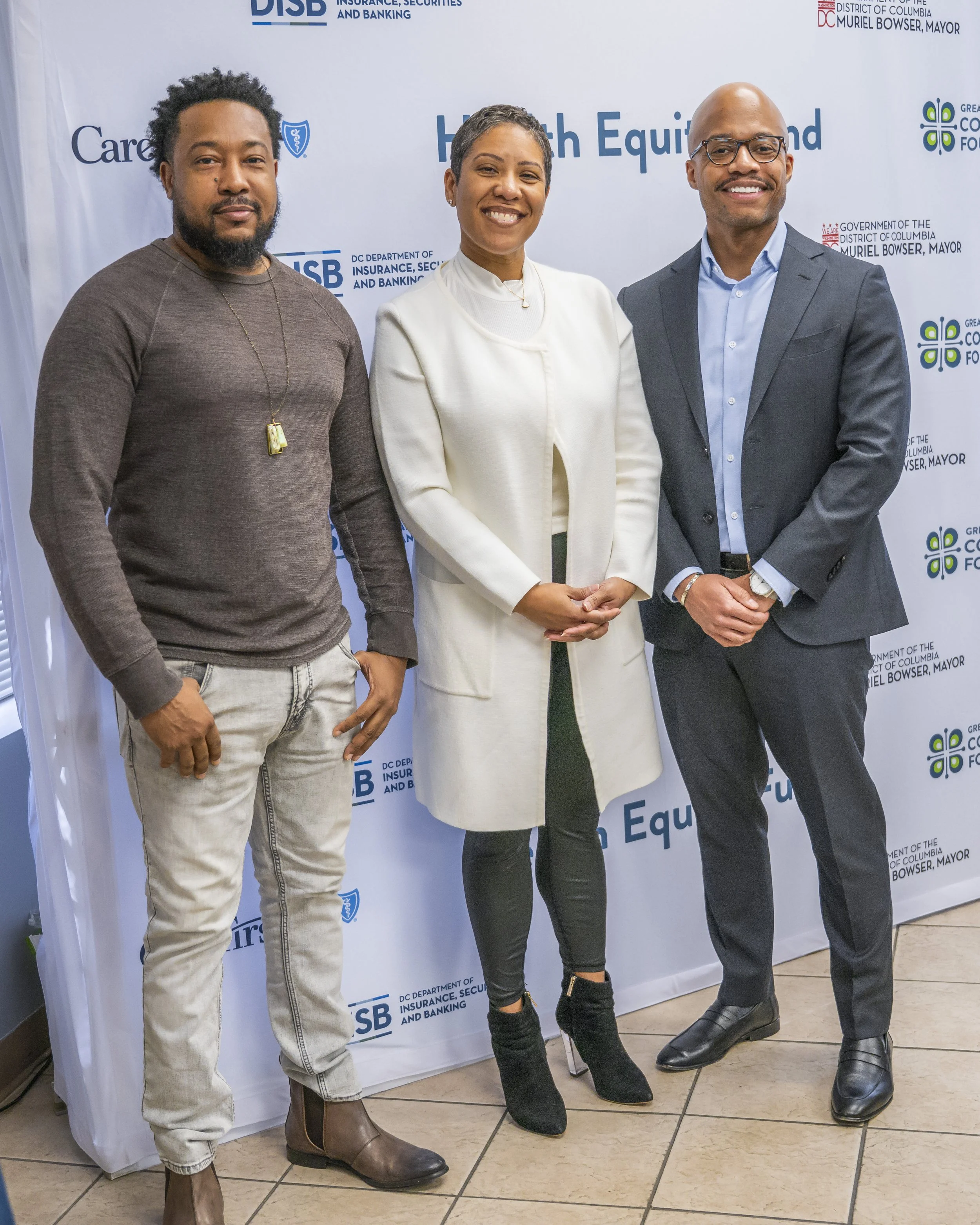
Tendani Mpulubusi, DCCDC, Nicole Elam, NBAF, and Darius Graham, The Community Foundation
The DC Community Development Consortium (DCCDC) and the National Bankers Association Foundation (NBAF) are partnering to launch BOSSTANK, an innovative program addressing two critical gaps facing small businesses in Wards 7 and 8: capital and coaching.
The project will support cohorts of five businesses in each ward, pairing them with consultants who can meet their specific needs and connecting them with Minority Depository Institutions that can provide access to capital. A bond strategy will ensure program continuity beyond the grant period.
“When you think about communities east of the river, they have a lot of talent and potential, but they don't have capacity or capital,” said Nicole Elam of NBAF.
The program was inspired by asking what a more equitable Ward 8 would look like and finding ways to support entrepreneurs who don't have friends and family money to get what they need to succeed.
Building Solidarity Economics: Worker-Owned Businesses
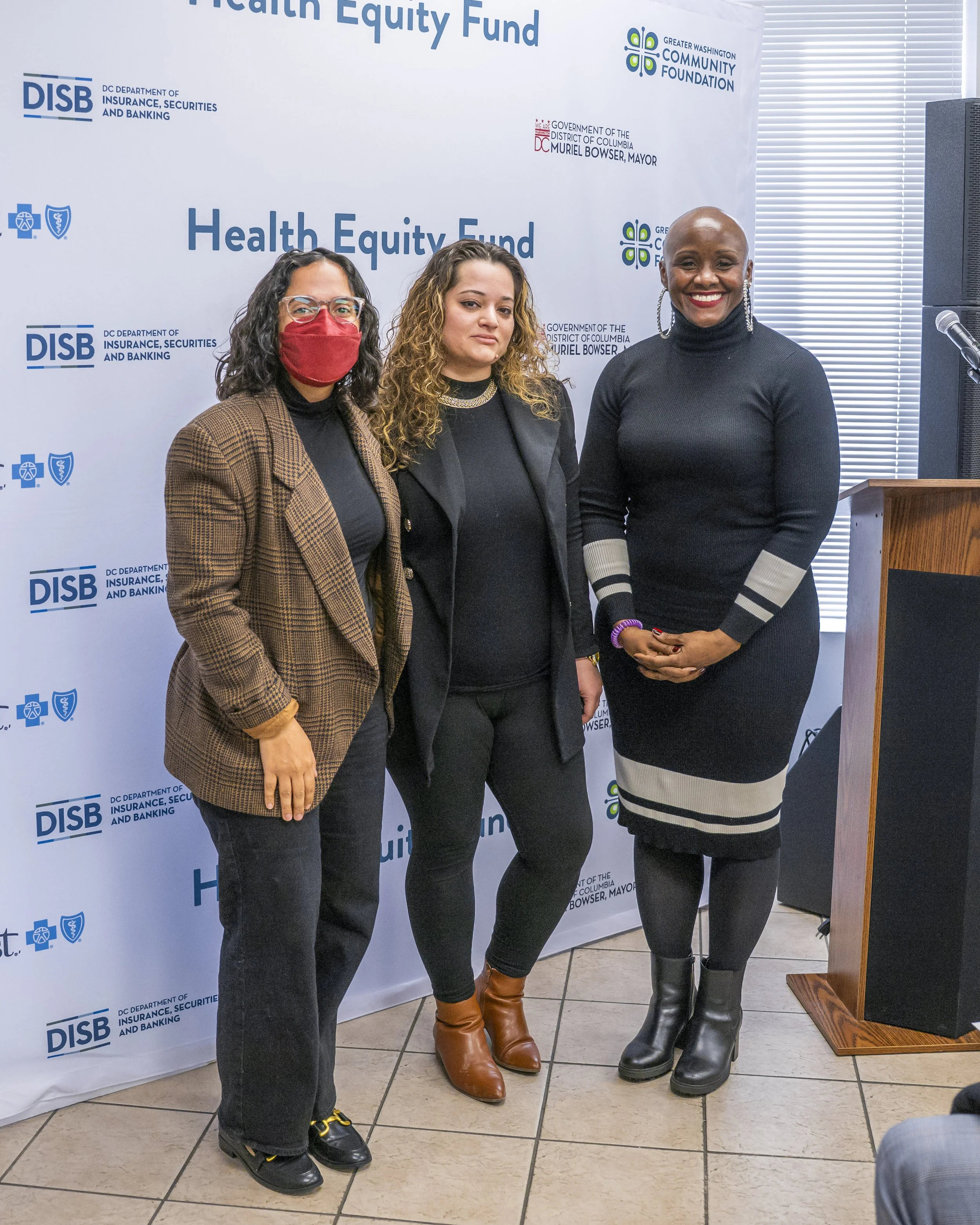
Bianca Vazquez, BCI, Darakshan Raja, MJF, Dawnn Leary, The Community Foundation.
Muslims for Just Futures (MJF) and Beloved Community Incubator (BCI) are combining an 18-month guaranteed income program with a cooperative business incubation model to build wealth and self-reliance in marginalized communities.
The project will support 40 people across eight worker-owned cooperative groups, effectively doubling the number of worker-owned businesses in DC.
Participants will receive guaranteed income while building and running their own businesses, with access to non-extractive lending through SEED Commons that relies on relationships rather than credit scores.
East River Entrepreneurial Fellowship
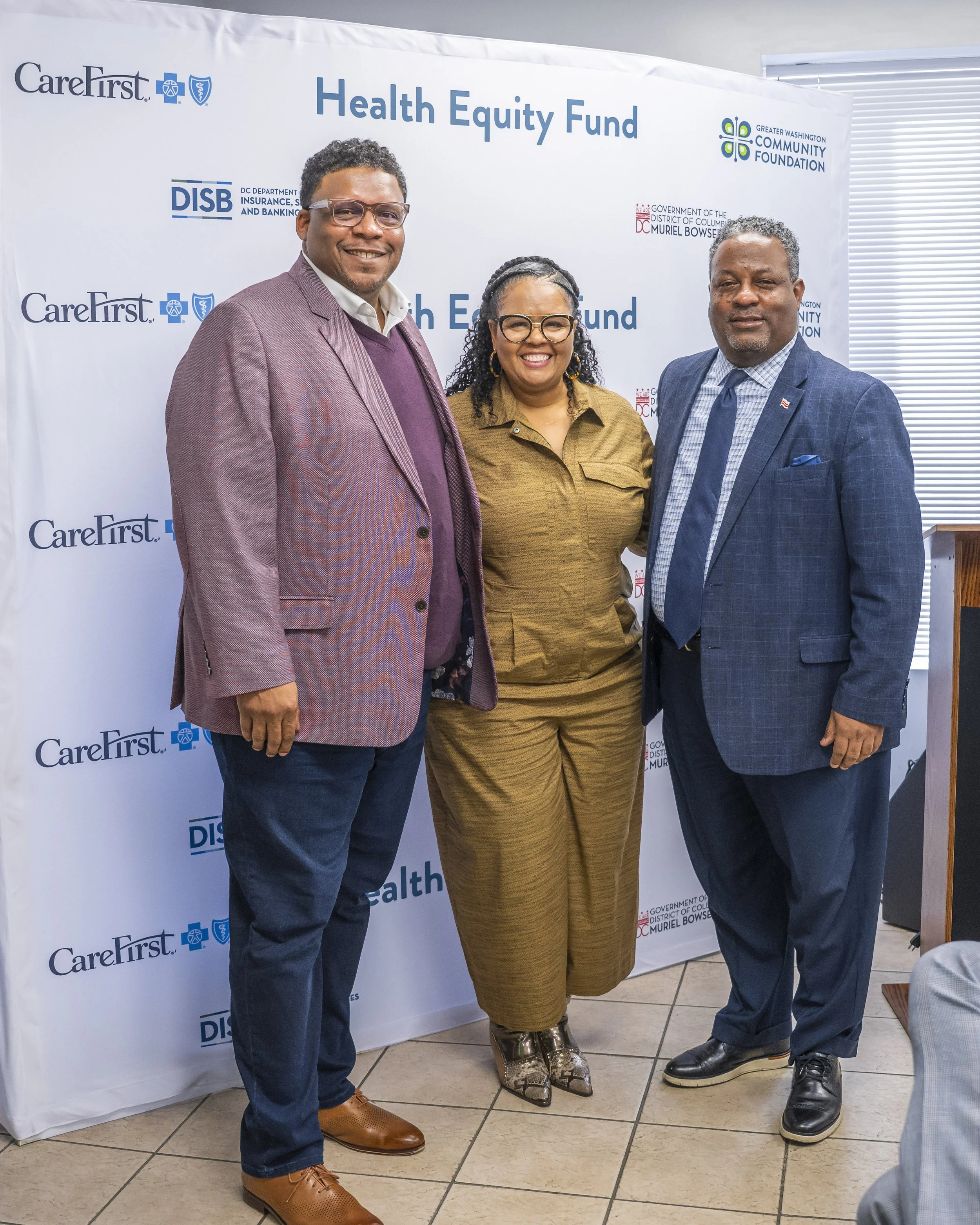
Rahman Branch, ERFSC, Dr. Marla Dean, The Community Foundation, Derek Ford, WDCEP.
East River Family Strengthening Collaborative (ERFSC), Washington DC Economic Partnership (WDCEP), and Guerilla Arts Ink have partnered to create a comprehensive entrepreneurship program for 30 young people ages 16-24 in Ward 7.
Fellows will receive $500 per month for the duration of the program, partial ownership of a $150,000 investment fund, business mentorship, and access to an Afro-futuristic co-working space called the “Manifestation Station.” The program will provide tax support, case management for families, and connections to industry leaders who can guide them through building sustainable businesses.
Keep Ivy City Home: An Anti-Displacement Project
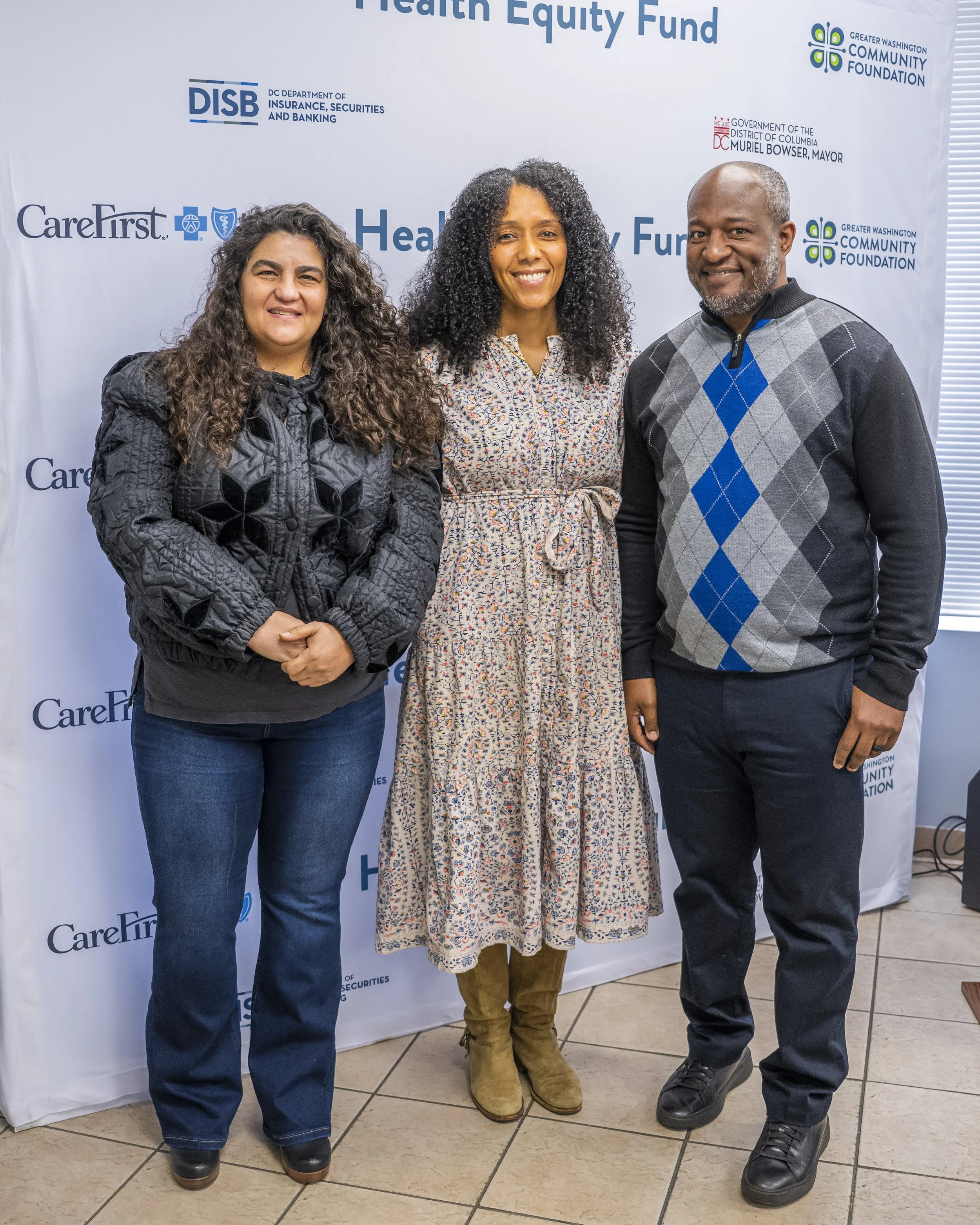
Parisa Norouzi, Empower DC, Isabel Spake, The Community Foundation, Vaughn Perry, Douglass Community Land Trust
Empower DC and Douglass Community Land Trust are partnering on a place-based initiative to prevent displacement in Ivy City, one of Washington, DC's first Black residential communities for working class families in Northeast DC. Research has shown that one-third of residents are at immediate risk of displacement.
The project will establish a community land trust in Ivy City while providing residents with the framework and tools to continue to live in the community they call home.
“By empowering Ivy City residents to stay in their homes, we hope to see improvements in other aspects of their lives, as well,” Parisa Norouzi, founder and Executive Director of Empower DC shared. “We want to put the community in the driver's seat.”
Connecting Community & Capital: Supporting Small Building Owners
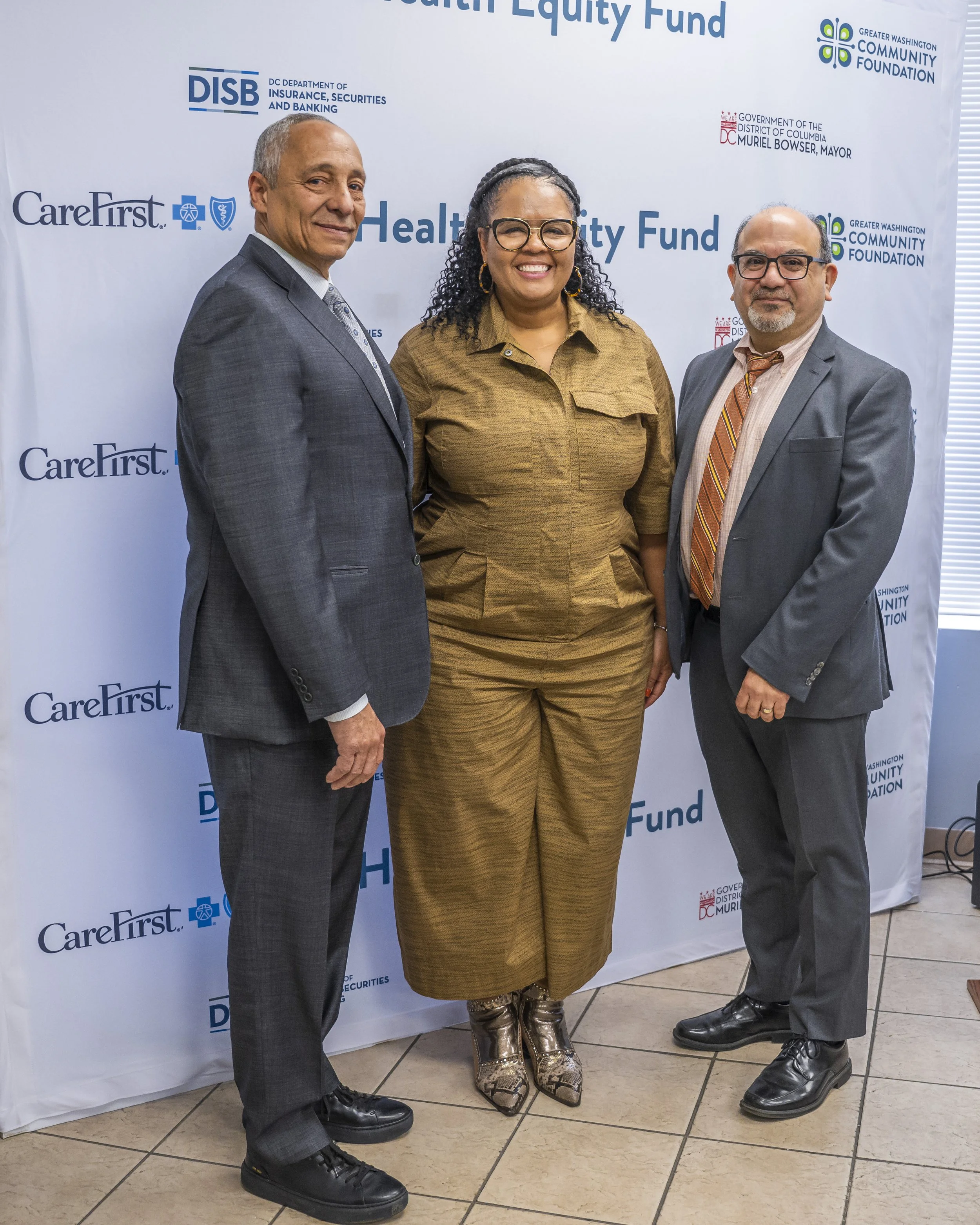
Stephen Glaude, The Coalition, Dr. Marla Dean, The Community Foundation, Ramon Jacobson, LISC DC.
The Coalition for Nonprofit Housing & Economic Development and LISC DC are addressing a largely overlooked segment of DC's housing ecosystem: small building owners, many of whom are DC residents who invested in real estate as a way of building wealth but now lack access to affordable financing for capital improvements.
The project will support 16 small building owners with home improvement loans and expand their ability to stay in DC as their incomes rise. The goal is to create lessons that can be shared nationally about supporting middle-class homeownership and preventing displacement.
Meeting the Moment: Coalitions Responding to Urgent Community Needs
Supporting & Strengthening Healthcare Access
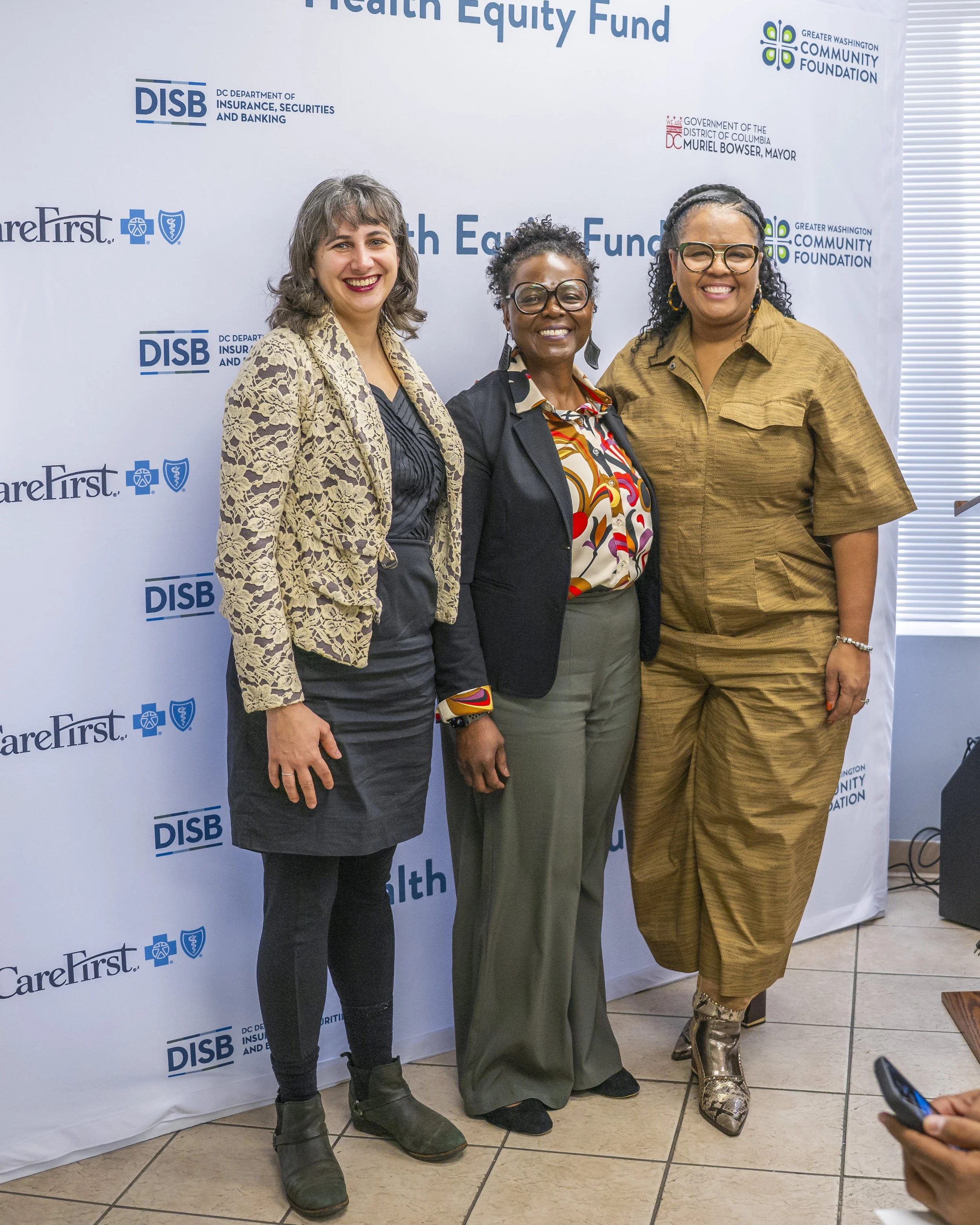
Elizabeth Falcon, DC Jobs With Justice, Ruth Fisher Pollard, DC Primary Care Association, Dr. Marla Dean, The Community Foundation
DC Connected Care Network and DC Jobs with Justice are working to protect healthcare access amid federal and local policy shifts that threaten coverage for thousands of DC residents. Experts say that Medicaid cuts could cost Federally Qualified Health Centers up to $45 million in revenue through 2027. At the same time, the DC Healthcare Alliance—a DC program that has provided vital health coverage to 26,000 of the city’s most vulnerable residents since 2001—faces severe cuts in the current DC budget.
With The Community Foundation’s support, the alliance will focus on restoring benefits, educating patients about eligibility requirements, and building a shared healthcare model that ensures consistent patient access.
“Our priority is making sure patients understand their coverage and can continue to access the care they need,” said Ruth Fisher Pollard of DC Primary Care Association. Elizabeth Falcon of DC Jobs with Justice added that ensuring residents get the care they need is fundamental to health equity.
The Way Home Campaign
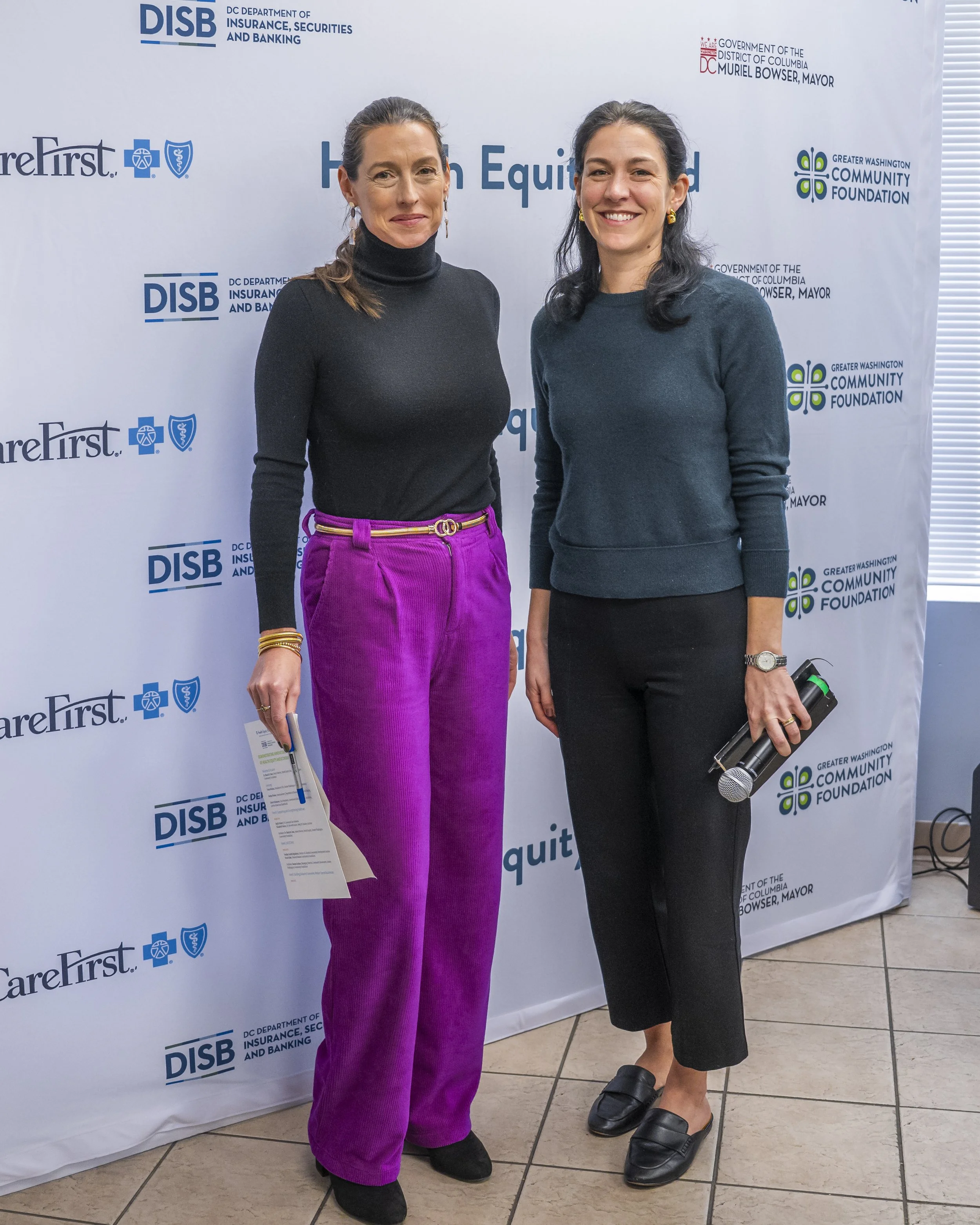
Lara Pukatch, Miriam's Kitchen, Jennifer Olney, The Community Foundation
The Way Home Campaign, led by Miriam’s Kitchen, is mobilizing the movement to end chronic homelessness in DC at a critical moment when people experiencing homelessness and proven housing-first strategies are under attack. The funding will support additional advocacy capacity, communications to mobilize community support, and mutual aid organizations providing direct support to residents.
“The story of homelessness is the story of inequity,” said Lara Pukatch, Chief Advocacy Officer at Miriam’s Kitchen. “Housing is healthcare—when people have a roof over their head, their health and wellbeing will improve.”
For more information about the Health Equity Fund, visit www.thecommunityfoundation.org/health-equity-fund.