
BOSSTANK: How Back-Office Support and Bankable Capital Are Transforming Entrepreneurship East of the River
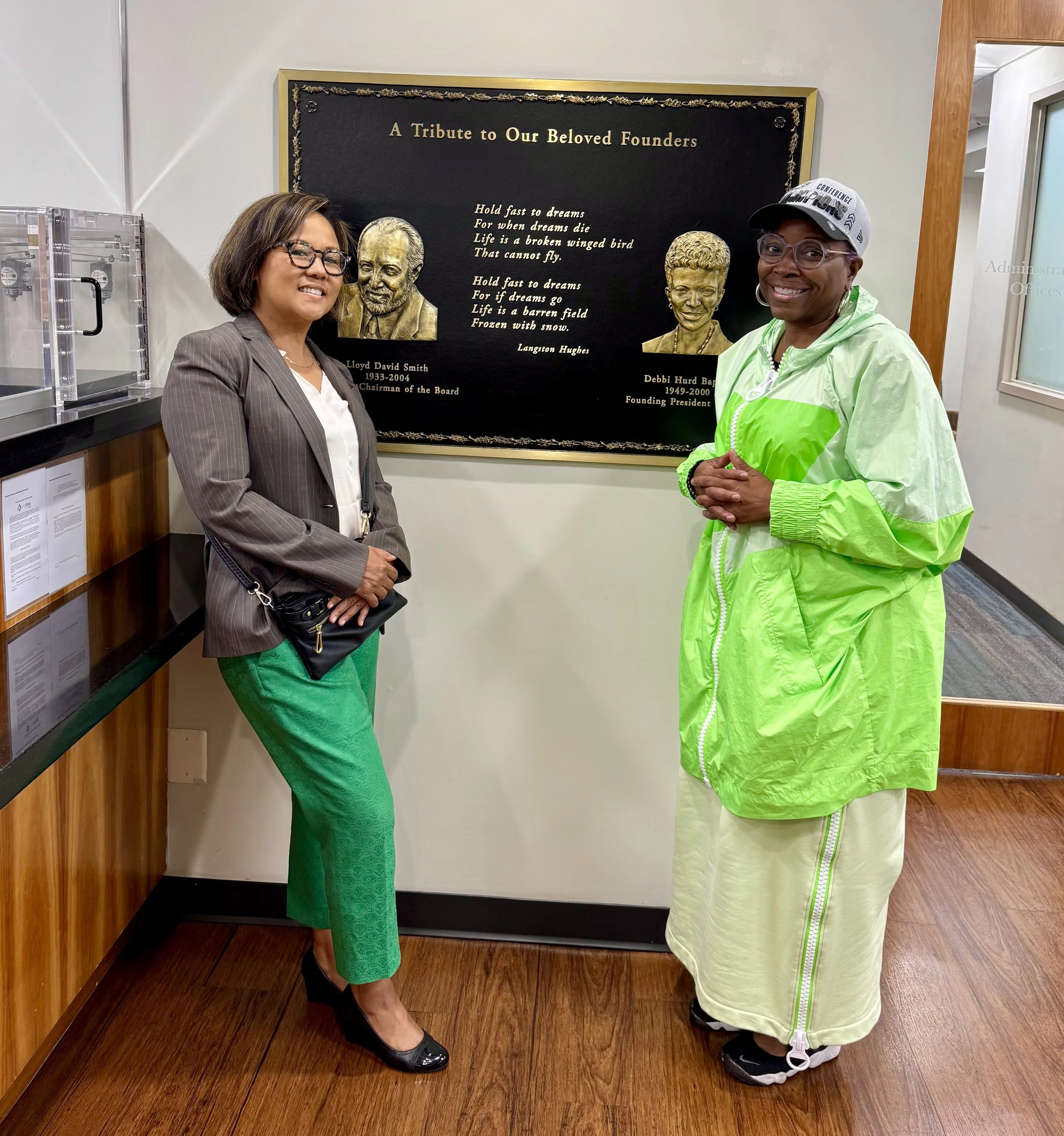
In January, The Community Foundation’s Health Equity Fund announced $15.7 million in multiyear investments in five transformative projects focused on collaborative approaches to increasing economic mobility and wealth building.
We are excited to share with you a special feature on one of these projects – DCCDC BOSSTANK, a partnership between the DC Community Development Consortium (DCCDC) and the National Bankers Association Foundation (NBAF) to provide back-office support and increased bankability to entrepreneurs and small businesses in DC’s Wards 7 & 8.
Washington, DC's Wards 7 and 8 are home to deep entrepreneurial spirit—business owners who know their communities, understand what's needed, and are ready to build. What's been missing isn't talent or vision. It's access to the same level of capital investment that flows more readily to other parts of the city.
A recent Ward 8 Community Economic Development Report found that from 2015 to 2019, Wards 7 and 8 received less than $500,000 in small business loans, compared to $7.8 million in Ward 1 – a difference of more than 175%.
For lower income neighborhoods like Ward 7 and Ward 8, that lack of investment can be a dealbreaker for many entrepreneurs and aspiring small business owners.
“Most residents in Ward 7 & Ward 8 don’t have the resources they need to start a business,” Tendani Smith Mpulubusi co-founder and Board Director of the DC Community Development Consortium (DCCDC) explains. “They can’t rely on friends and neighbors for a capital loan or investment to get started because their neighbors are in the same financial situation! Without capital investment, entrepreneurship is simply out of reach for most folks.”
“Ultimately opportunity is the health of a community," Gloria Nauden, Board & Executive Director and co-founder DCCDC adds. “Many of the health problems our community faces are directly tied to economic pressures.”
“Without the balance of thriving small businesses creating good jobs, hiring locally, and building wealth that stays in the community, you can't create an environment where people can be truly healthy.”
Ward 8 Community Investment Fund: Taking Investments from Possibility to Pilot
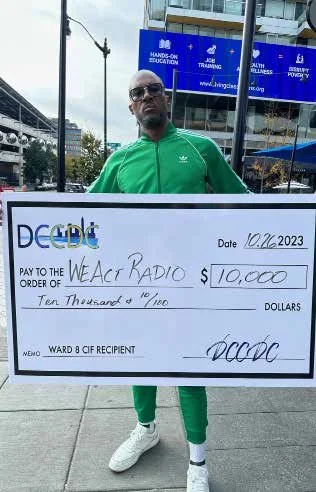
Tendani, Harvey Yancey, and Gloria founded DCCDC in 2022. Together, they developed and piloted the Ward 8 Community Investment Fund (W8CIF), an initiative that provided grant-secured loans for Ward 8 entrepreneurs and small businesses through a partnership with DC’s Department of Small and Local Business Development (DSLBD)
“The model is elegantly simple,” Gloria shares. “The city provides cash collateral to secure a loan from a bank. The entrepreneur takes the loan, repays it, and gets the collateral back as a grant—putting more gas in the tank or covering what they couldn't before. Their credit isn't hurt. The bank isn't hurt. And for most participants, it's their first real funding to jump-start their business.”
Most loans are relatively small (between $10,000-$20,000) but for these small businesses, they made a huge difference. Since 2023, the initiative deployed over $2.1 million to 258 businesses across several industries. Last year, DSLBD officially adopted the program – increasing the size and scale of the project.
Building Capital, Connection, & Capacity for Small Businesses
Gloria, Harvey, and Tendani quickly recognized that the work started by W8CIF still had a lot of room for growth and innovation.
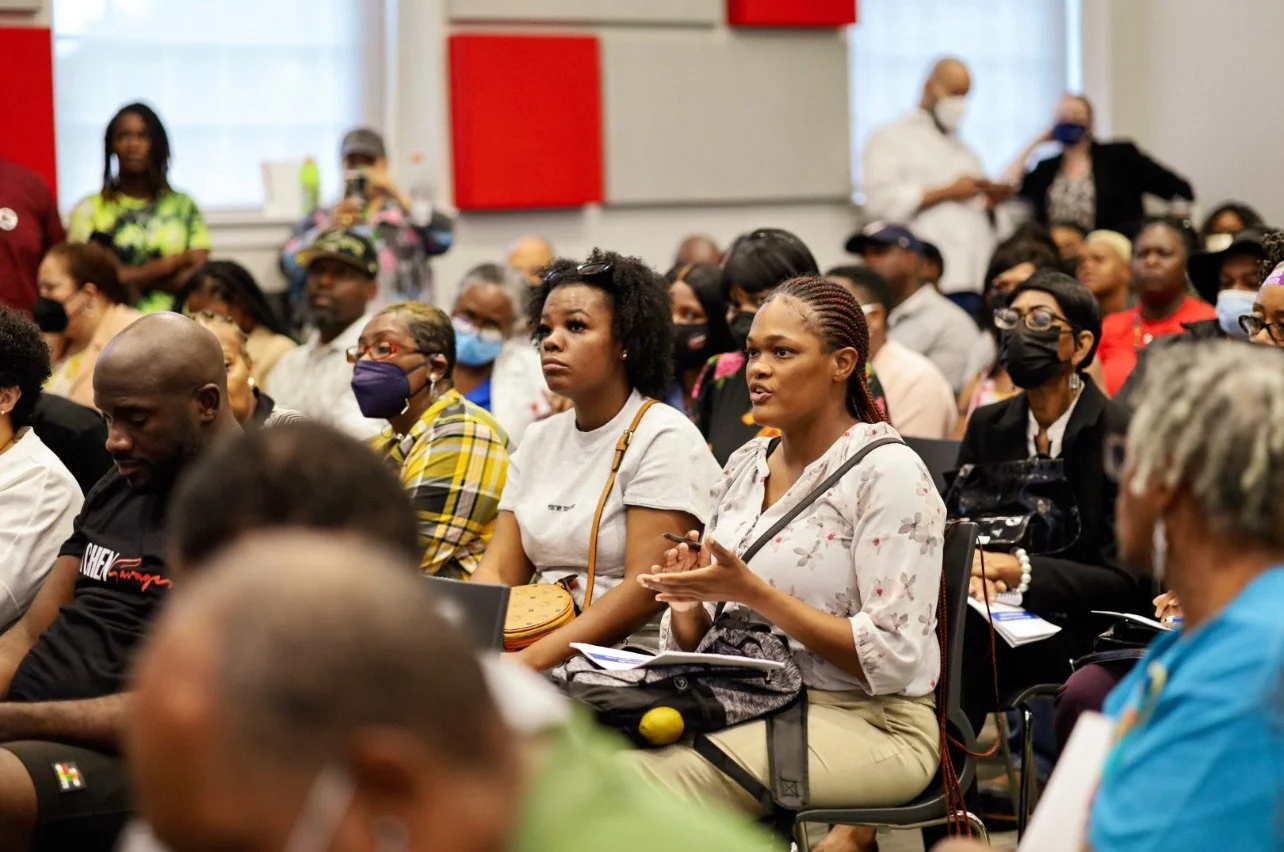
Small business owners share their concerns and insights at a W8CIF information session.
“If we really want small businesses to succeed, we need to dive deeper into the sweat equity that owners are putting into their businesses,” Tendani explains. “What are the things that are occupying the majority of their time and energy that they could be using instead to grow their business?”
While the needs most frequently cited by Ward 8 entrepreneurs vary, some of the most common topics include business development, marketing, finance, and legal support – critical aspects of business ownership that can be both technical and costly to implement.
“Traditional entrepreneurship models mainly focus on technical assistance like workshops and soft skills training,” Gloria adds. “But what entrepreneurs really need is the capital, connections, and capacity to transform their business and take it to the next level. They need bankability.”
To help with this, DCCDC reached out to the National Bankers Association Foundation (NBAF), a national network of minority depository institutions (MDIs) and community banks that has been looking to expand banking access in communities like Ward 7 and 8.
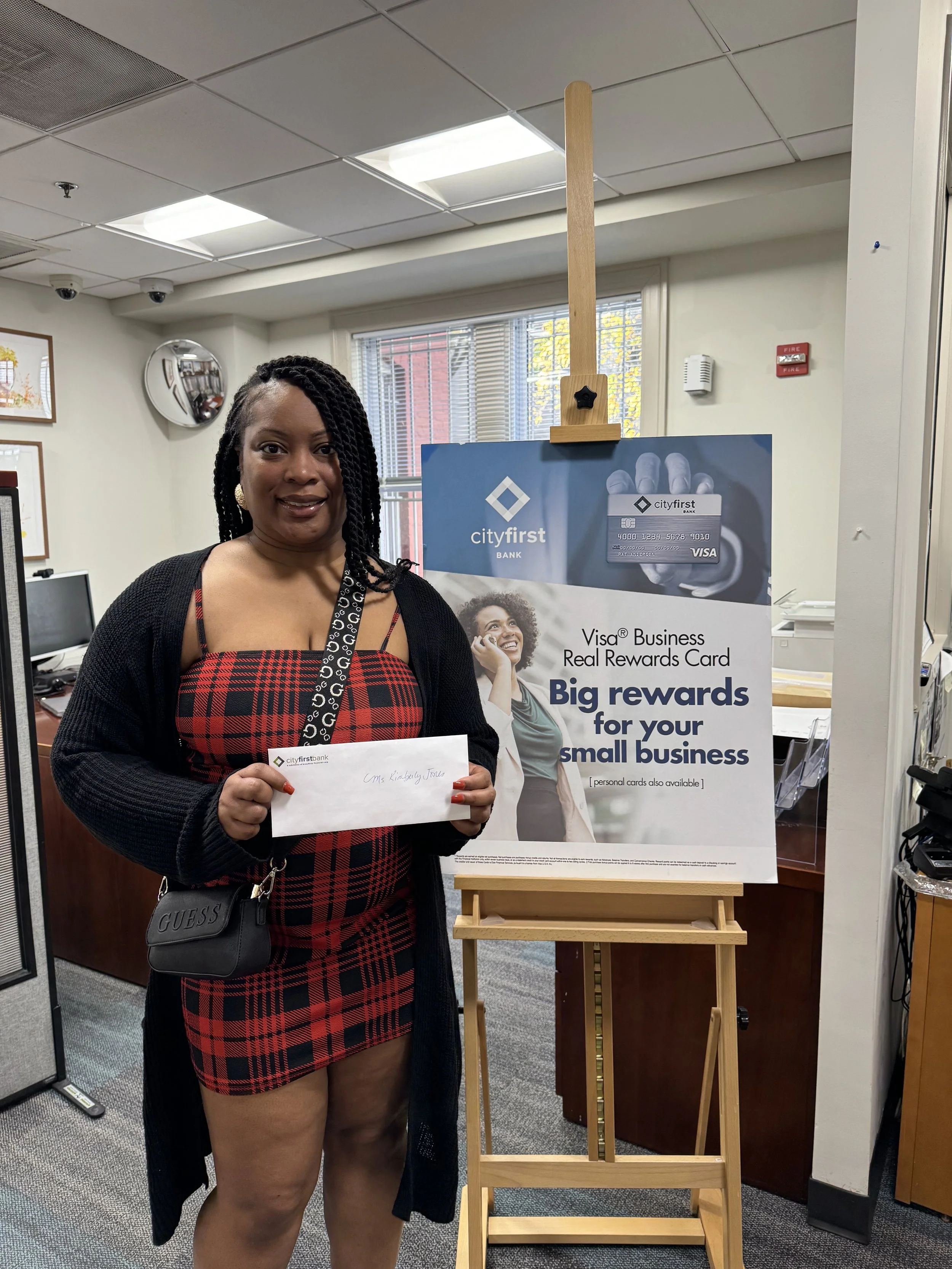
A Small Business Owner at City First Bank, an DC-based MDI
“A lot of businesses in communities like Ward 7 and 8 can’t access the credit they need – not because of a lack of demand or effort on their part, but because of how banks underwrite risk,” explains Cheryle Thorne-Harris, Pillar Program Director at NBAF.
Cheryle explains that most lenders rely on the 5 C’s of credit (Character, Capacity, Capital, Collateral, and Conditions) as benchmarks to determine whether or not they should extend a loan. While these factors are comprehensive, they often don’t take into consideration the systemic racial and socioeconomic barriers that some communities face and that MDIs are all too familiar with.
“Our MDIs recognize that if we’re going to build up these communities, we need to meet them where they are,” Christopher White, Deputy Executive Director of NBAF shares. “That’s why we are continually expanding strategies to build community trust and address their needs while still maintaining sound credit practices.”
BOSSTANK: A Kickstart to Sustainable Back-Office Support & Bankability
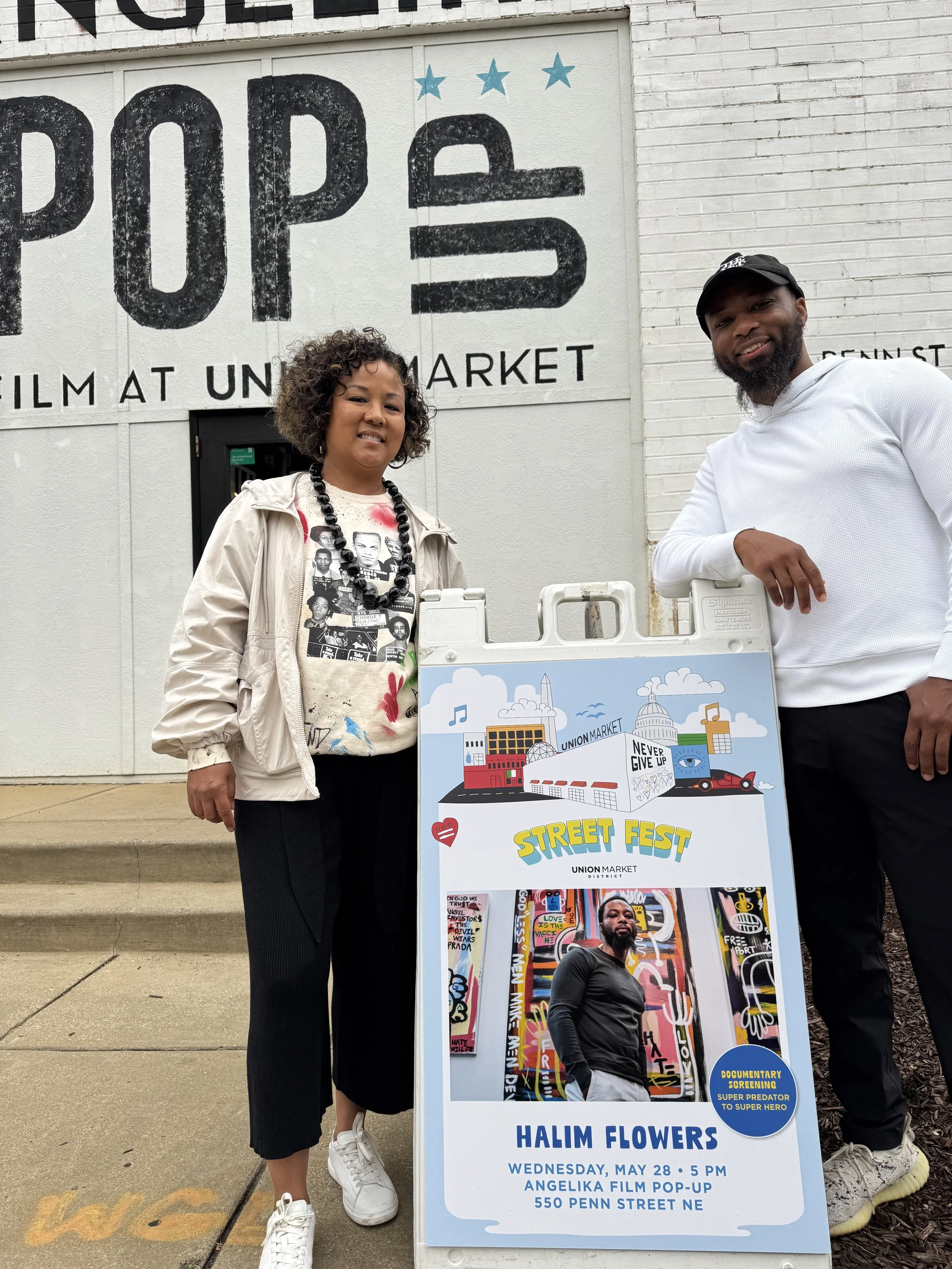
With support from the Greater Washington Community Foundation’s Health Equity Fund, DCCDC & NBAF have partnered to launch BOSSTANK, a program pilot designed to help small businesses East of the Anacostia River strengthen their operations, improve financial readiness, and target traditional lending and procurement opportunities.
The program will enroll 10 small businesses from Ward 7 and 8 in a one-year intensive program that will provide them with access to critical back-office support services (BOSS) through pro bono business advisory services experts. These professional contractors will become extensions of each business's team, allowing entrepreneurs the expertise and the capacity to create sustainable systems that will grow with their business.
Participants will also gain access to NBAF’s network of MDIs, including long-time community institutions like City First Bank, which will provide entrepreneurs with access to invaluable expertise and relationships within the banking community.
Each year-long cohort will culminate in an annual ‘Shark Tank’ style pitch competition, where participants will have the chance to pitch their business to potential investors.
“A lot of times small businesses have difficulty going into a banking environment and getting the information and statements they need,” Cheryle explains. “It’s not that they don’t have what it takes, it’s that they don’t have the relationships or the insider understanding of how the banking system works.”
“Our goal is to help lay that foundation,” Cheryle adds. “We’re not simply growing a program; we’re building durable infrastructure that connects MDIs, impact investors, and local entrepreneurs through a common, equity centered framework.”
A Blueprint for Scalable, Sustainable Impact
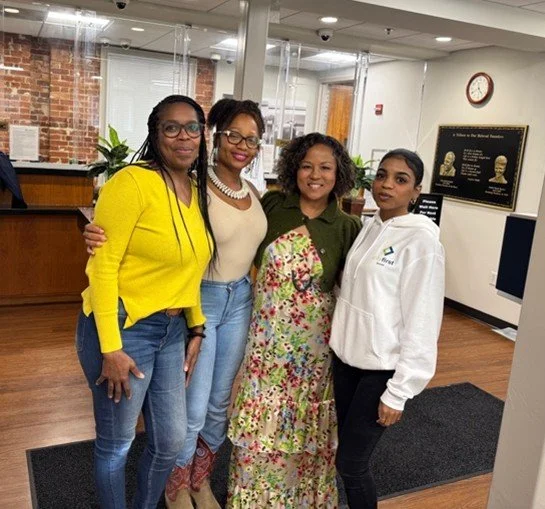
Part of that infrastructure involves ensuring that BOSSTANK’s work can scale to meet the demand and opportunity across DC and the region. However, this comes after a year in which federal funding cuts and regional economic challenges have made funding for projects like BOSSTANK harder to find.
“Large grant funds are not usually available on a routine basis,” notes Cheryle. "We didn't want BOSSTANK’s work to end with this one grant. We wanted to make sure these programs are sustainable.”
To address this, NBAF and DCCDC designed an innovative approach that would harness the power of the banking community to support BOSSTANK through Business Opportunity Bonds, secured with the help of funding from The Community Foundation’s Health Equity Fund. The interest spread on the bonds should provide BOSSTANK with a consistent flow of funding that will allow the program to operate independently for up to 10 years.
The model has potential to transform community impact investing in the nonprofit sector, not only in DC, but across the region and potentially the country.
Together, NBAF and DCCDC plan to compile a ‘Small Business Playbook for Philanthropies & MDIs’, which will further explore how the banking and philanthropic sectors can collaborate to sustainably invest in community impact.
“BOSSTANK was intentionally designed to serve as a replicable, place-based model,” Christopher explains. “We hope to expand this model across our network so we can unlock banking and capital for more communities and help them achieve their personal and financial goals.”
The Community Foundation is proud to support BOSSTANK through our Health Equity Fund. For more information about this project, visit www.dccdc.org/bosstank