
Building Power from the Ground Up: Empowering Ivy City Residents to Take Control of Their Community’s Future
In January, The Community Foundation’s Health Equity Fund announced $15.7 million in multiyear investments in five transformative projects focused on collaborative approaches to increasing economic mobility and wealth building.
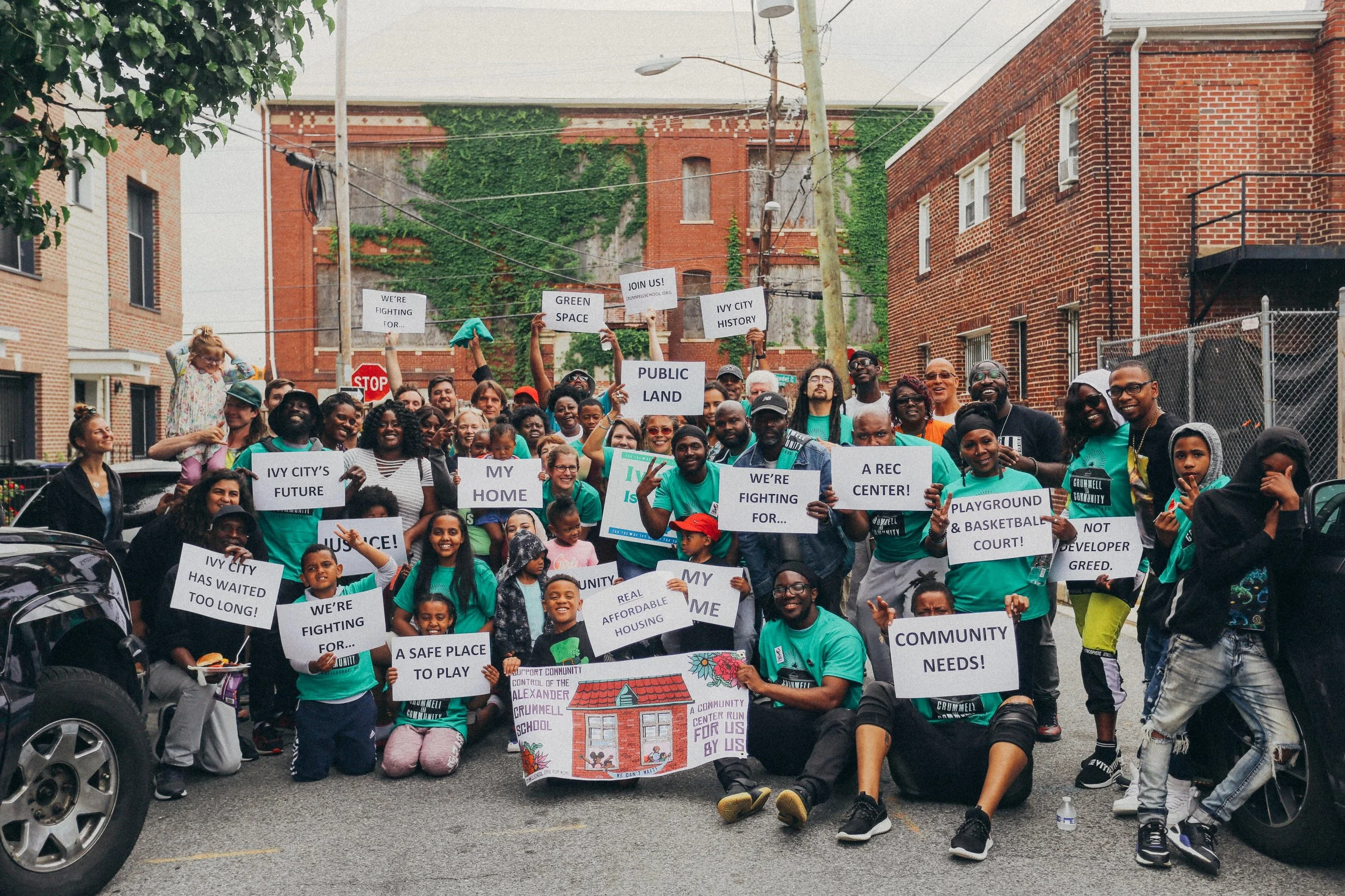
We are excited to share with you a special feature on one of these projects – the Ivy City Anti-Displacement Demonstration Project - a partnership between Empower DC and Douglass Community Land Trust to provide DC residents with the framework and tools to continue to live in the community they call home.
Tucked away between New York Ave and West Virginia Ave in Northeast DC lies one of DC’s oldest and historic neighborhoods. Founded in 1872 as one of Washington, DC's first Black residential communities for working class families, Ivy City is home to nearly 5,000 residents — including Sebrena Rhodes, a DC native, mother, and a passionate advocate for her community.
“Ivy City is a tight-knit community,” Sebrena shares. “I can knock on somebody’s door and they have a plate of food at the table waiting for me; we’re more than neighbors — we’re more like family.”
However, in recent years Sebrena says that her neighborhood family has seen a lot of pressure to move elsewhere, as rising housing costs and incoming developments threaten to displace many of the residents who have called Ivy City home for decades.
Ivy City: A Community with a History of Activism
“Ivy City has been through a lot,” shared Parisa Norouzi, founder and Executive Director of the community activist nonprofit, Empower DC. “But they also have a tremendous history of community activism.”
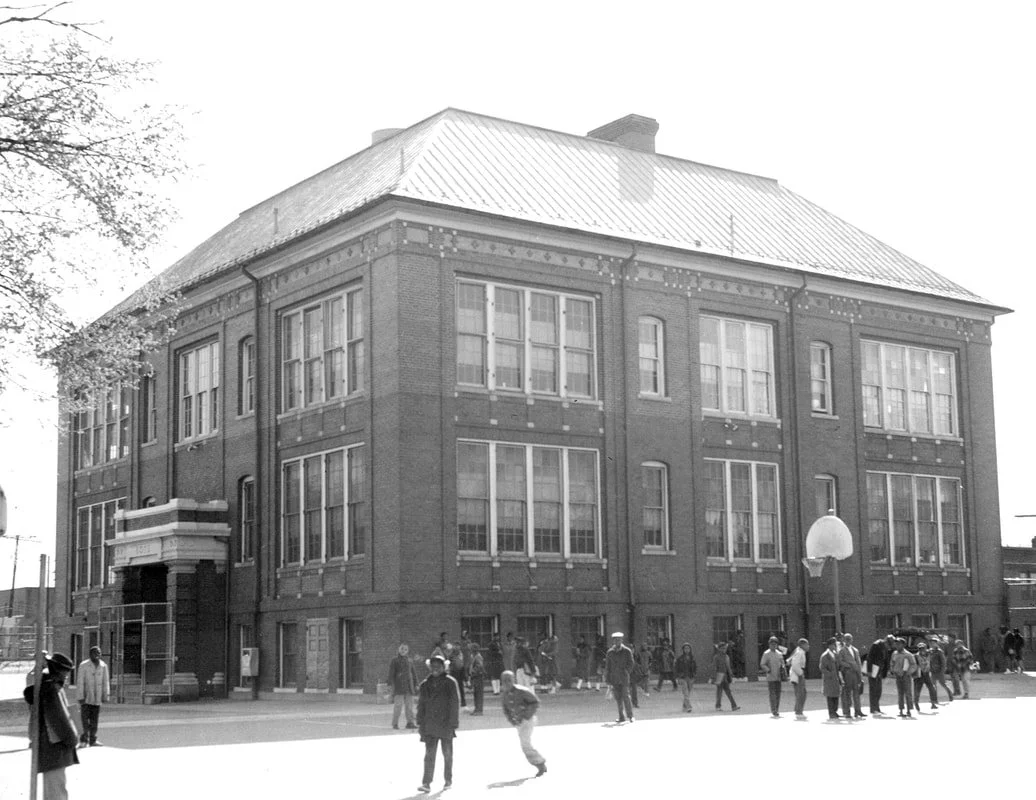
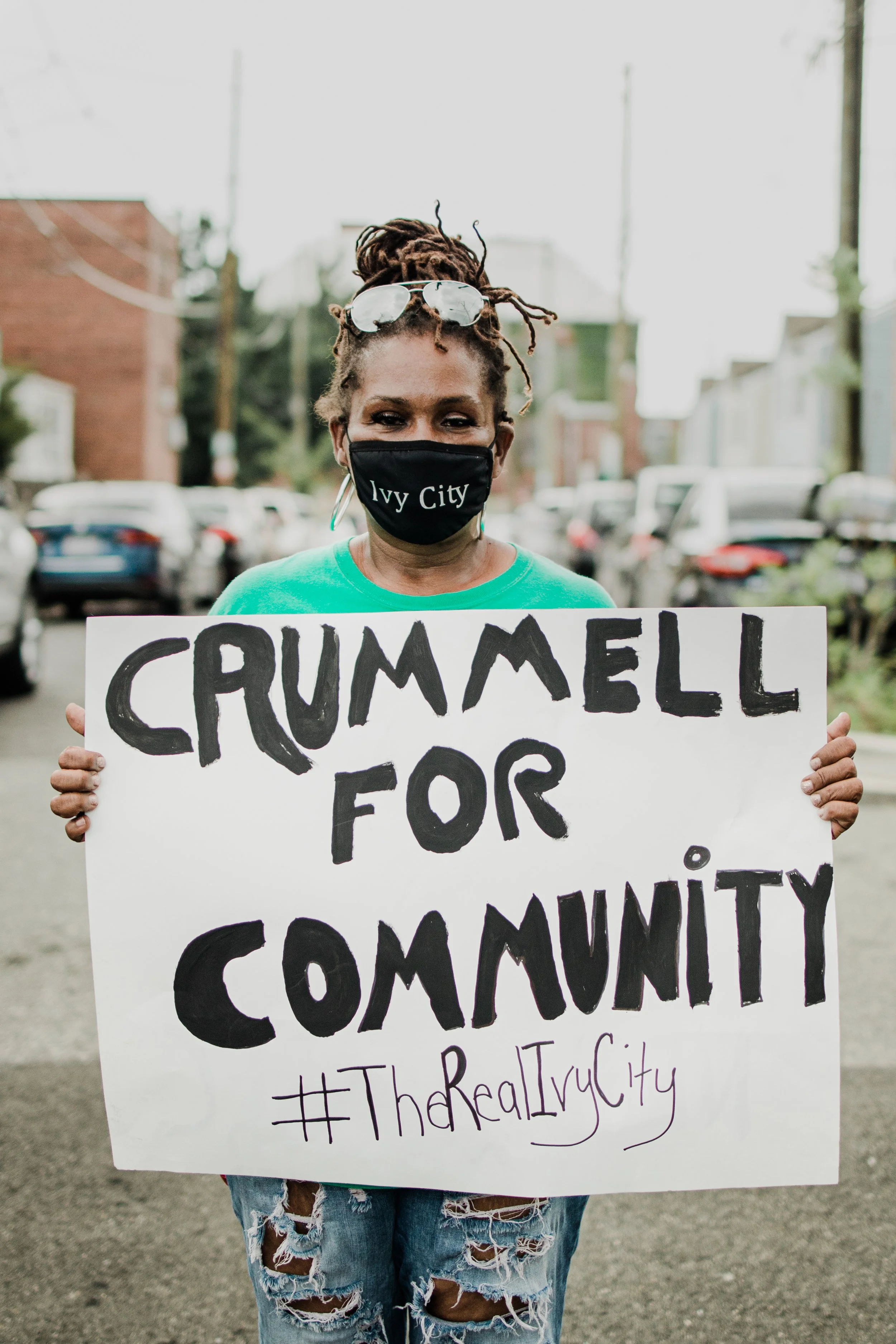
The Alexander Crummel School opened in 1911, was one of the first DC Public Schools for Black children and was a pillar of the Ivy City community. The school closed in 1977 and has been vacant for many years.
In 1911, during a time when Black neighborhood organizations were typically called "civic associations," Ivy City intentionally renamed theirs a "citizens association"— a title typically reserved for white neighborhoods—a powerful assertion of the residents’ sense of belonging and rights.
But Ivy City's story also reflects generations of harm inflicted through racist land use policies. Though the community was founded as a residential community, by the first half of the 20th Century, discriminatory zoning practices transformed it into an industrial center that included a bottling plant, an industrial cleaning firm, and a railyard.
Today, it's a neighborhood of stark contrasts — part residential, part industrial, with homes dating to the late 1800s sitting alongside warehouses and facilities that have been emitting pollutants since the 1930s.
It also has remained one of the last affordable communities in DC — a neighborhood where many lifelong Washingtonians found themselves after redevelopments made places like Logan Circle and Adams Morgan too expensive to afford.
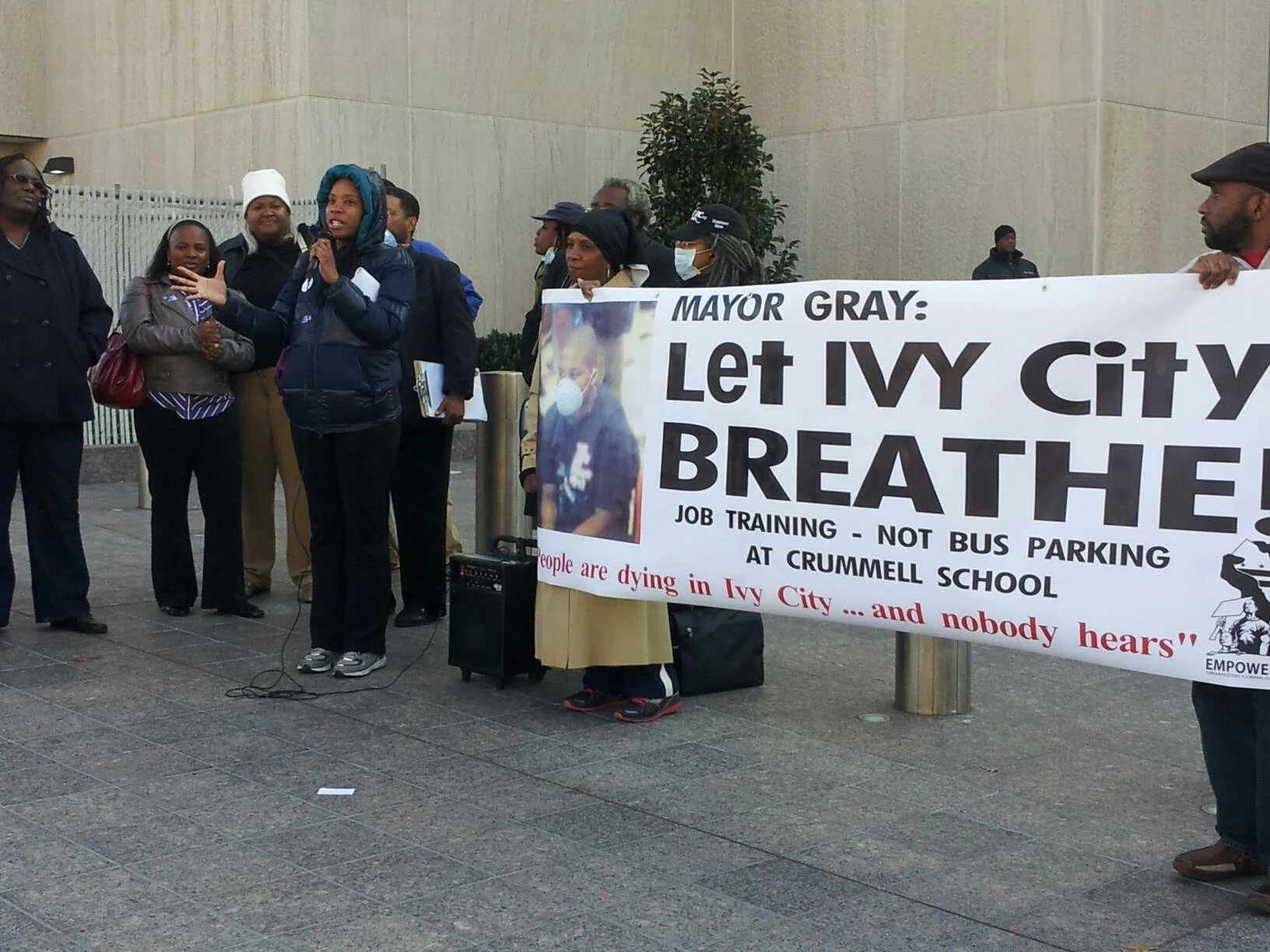
Ivy City Residents protest against a proposed bus terminal in their neighborhood.
Parisa first came to Ivy City as a community organizer in 2001, working with residents to lobby the city council to improve the quality of life. Within a few years, Empower DC was born — with Ivy City community advocates among the organization’s most critical organizers.
The movement grew quickly, racking up several key wins including lobbying against a neighboring pollution-plagued bus terminal and securing funding to reopen and renovate the historic Crummell School — one of the oldest DC Public Schools serving Black children in DC.
“As residents, we’re incredibly proud of our community,” Sebrena shares. “This is our home – we want to stay here; we want our children to grow up here, go to college, and come back to their families in this neighborhood.”
“DC may change, but Ivy City will always be our home. We just need the resources and the means so we can fight for it.”
Laying a Community-Centered Framework to Prevent Displacement
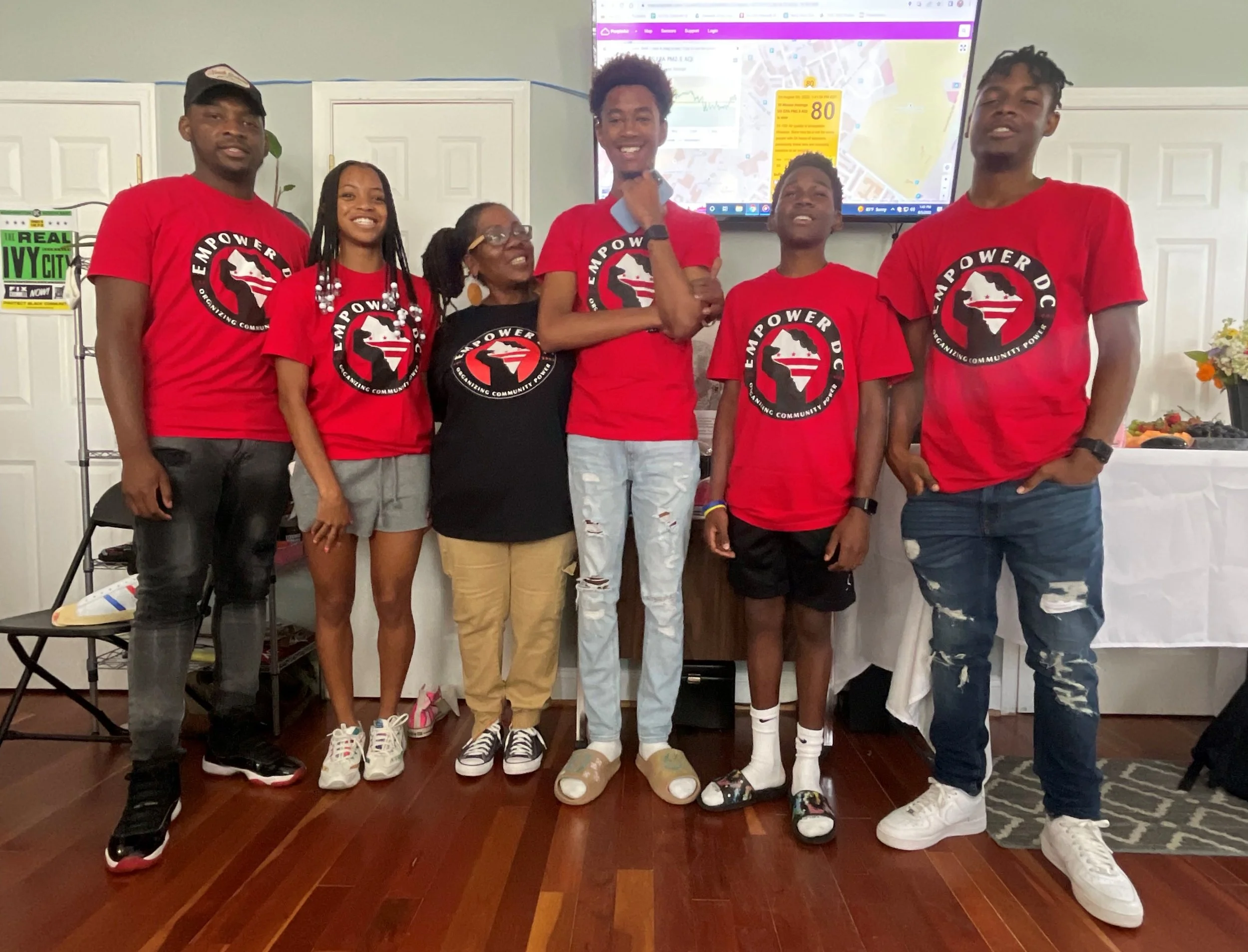
To facilitate this, Empower DC teamed up with the Douglass Community Land Trust to launch the Ivy City Anti-Displacement initiative. Supported by The Community Foundation’s Health Equity Fund, the Initiative is a multi-faceted community-centered approach designed to put power and resources directly into the hands of Ivy City residents.
The initiative starts with establishing a Direct Assistance Fund to help residents facing critical financial strain or housing costs that could lead to displacement. The Fund will be managed by a community board that will leverage the funds to meet the greatest need.
“Access to stable and affordable housing is one of the most important and impactful Social Determinants of Health,” Parisa explains. “It not only impacts your economic well-being, but also your mental, emotional, and physical outcomes, as well.”
(Addressing the Social Determinants of Health is a primary focus of The Community Foundation’s Health Equity Fund.)

“By empowering Ivy City residents to stay in their homes, we hope to see improvements in other aspects of their lives, as well.”
Part of that involves creating a community land trust – an economic mobility model that harkens back to the early days of the Civil Rights Movement.
“The idea is to purchase property in Ivy City that will belong to the community,” shares Ginger Rumph, Executive Director of Douglass Community Land Trust. “Residents will work together to decide how the property is run and ensure that it stays affordable — independent of rising housing prices or neighboring developments.”
As part of the community land trust, residents will lease property from the land trust, under a covenant designed to keep prices affordable and under community control — ensuring that community housing values or affordability won’t be impacted if and when a resident decides to move.
Residents have already identified a potential property to acquire — an old complex on Kendall Street that has long sat vacant due to neglect by the previous owners.
“We had folks who lived in that building for 50 years,” Sebrena shared. “Getting community ownership of that space will allow us to make sure it is properly maintained and stays in the community, so folks can continue to live here at an affordable rate for as long as they want.”
Recognizing the rapid growth and development of DC, the initiative will also set up a Community Benefits Task Force, which will empower residents to negotiate directly with incoming developers regarding key aspects of upcoming projects — including investments in the community, public amenities, and broader community impact. These investments could include contributions to Ivy City’s Direct Assistance or Site Acquisition Funds, or other initiatives as determined by the residents.
While Community Benefits Task Forces are common in more affluent DC neighborhoods, this would be the first time Ivy City residents have been empowered with the tools and protocols to negotiate, secure, track, and enforce such agreements for their own community.
“We want to create a truly inclusive community that utilizes the knowledge, expertise, experience, and power of the families that live here,” Parisa shares. “The Community Benefits Task Force is a big first step towards securing that.”
"We want to be a model for other communities in the District," Rhodes says. “A model that makes it clear that it should be impossible for development to move forward without the vision and drive of residents. Residents should always be at the front."
The Community Foundation is proud to support the Ivy City Anti-Displacement Demonstration Project through our Health Equity Fund. For more information about this project, visit www.empowerdc.org