

When Faith Meets Action: A Gathering to End Homelessness
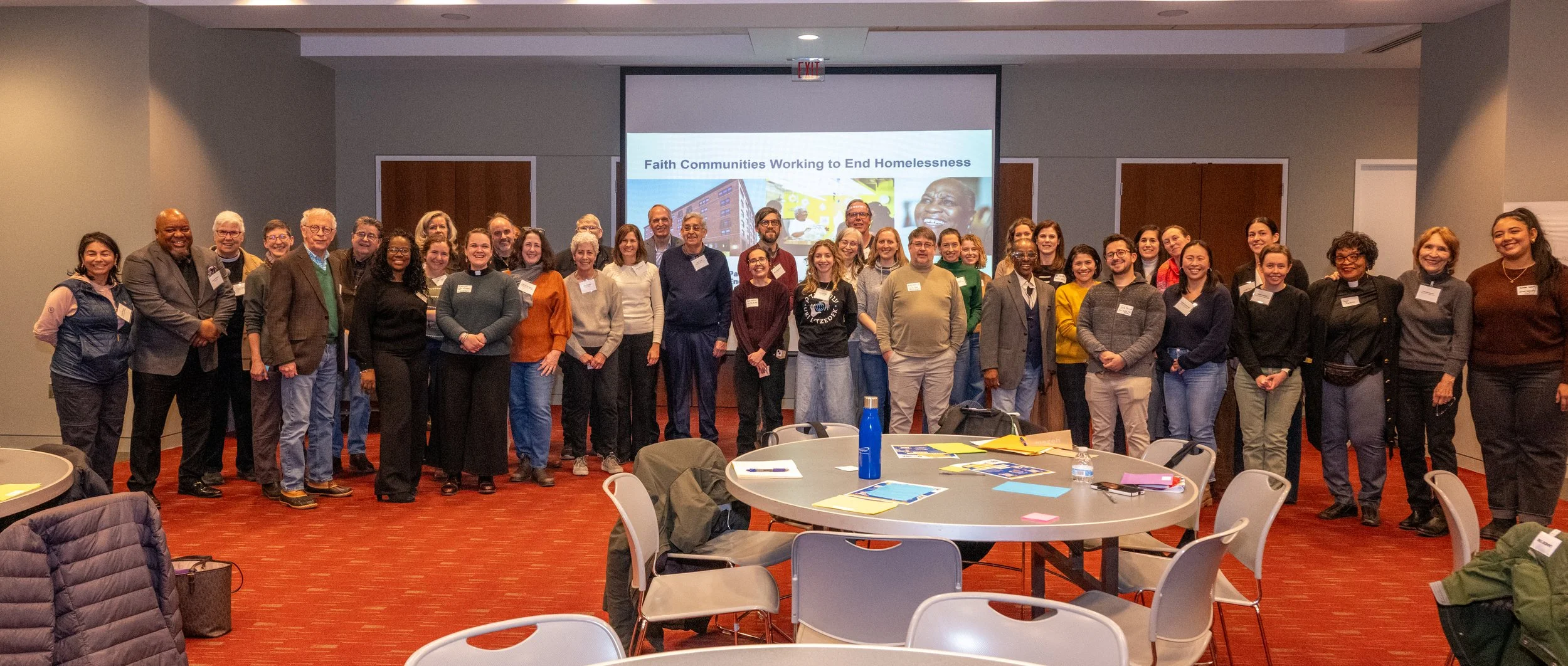
DC's faith communities have always shown up for their most vulnerable neighbors. On February 9, the Partnership to End Homelessness brought fifty of them into the same room to ask: what more can we do — and how do we do it together?
Following federal actions last summer that deployed law enforcement and the National Guard to clear encampments, people experiencing homelessness in DC have faced an increasingly dangerous situation. In response, the Partnership to End Homelessness organized Faith Communities Working to End Homelessness – an inaugural faith leaders convening to help faith-based leaders and nonprofit providers partner in new and innovative ways to meet the moment.
A Legacy Renewed
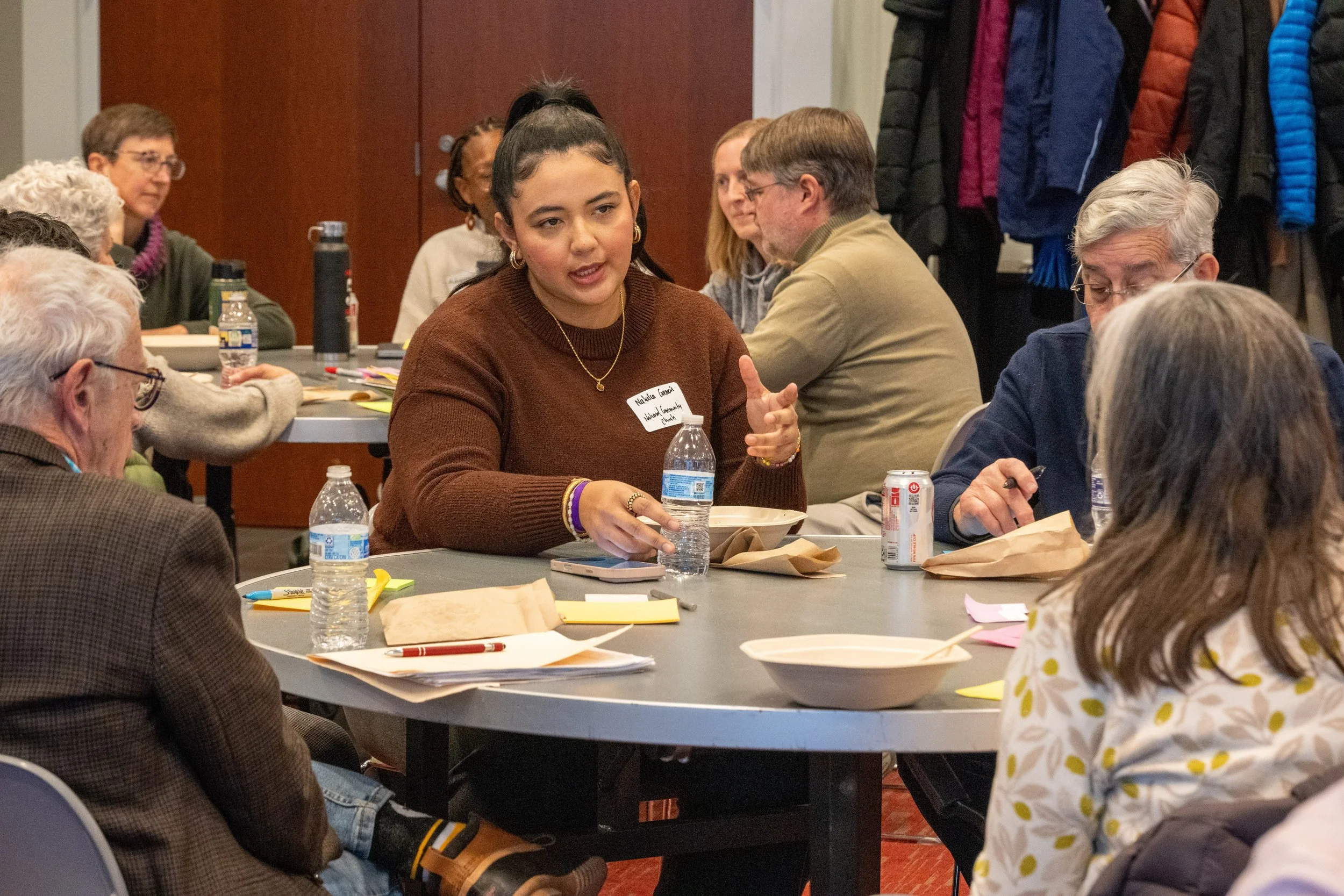
DC’s faith communities have been an integral part of our city’s efforts to support people experiencing homelessness. Many of our most effective nonprofit organizations started as small faith-based initiatives. As part of the convening, congregations from across the faith diaspora shared a few of the innovative and intentional ways they have chosen to get involved.
Mount Vernon Place United Methodist Church welcomes its unhoused neighbors every Sunday morning through its Shower Ministry. Guests are invited to take hot showers, receive clean socks and underwear, and enjoy coffee, tea, water, and snacks in a warm, hospitable setting. For many people experiencing homelessness, access to basic hygiene is limited. The Shower Ministry goes beyond meeting physical needs—it restores dignity and fosters a sense of belonging. Those who come for showers are not just visitors; they are becoming part of a growing community.

Rev. Dr. Sarah Johnson Austin, Senior Pastor at New York Avenue Presbyterian Church.
For 45 years, The New York Avenue Presbyterian Church has operated The Radcliffe Room, an all-volunteer ministry that provides food, clothing, and friendship to more than 100 homeless men and women every Sunday morning. What started as a response to immediate needs has blossomed into a vibrant, connected community rooted in mutual relationships, shared service, and worship together.
In 2019, the church deepened its commitment to walking alongside neighbors experiencing homelessness by becoming the host site for the Downtown Day Services Center—a welcoming weekday hub offering coordinated support. The Center reflects a strong multi-sector partnership: it is operated by the DowntownDC Business Improvement District, funded by DC’s Department of Human Services, and delivers services through partnerships with Pathways to Housing DC, HIPS, Unity Health Care, the DC Department of Motor Vehicles, and the Terrell Waters Dental Clinic.
St. George's Episcopal Church is pioneering something bold: when they discovered that a family in their network needed stable housing, they looked at their own building and saw possibility. A small apartment on the church’s property was re-envisioned as a home. Three years later, that family continues to live on church property, enjoying safe and stable housing.

A Moment That Demands Our Best
The work of ending homelessness has always been urgent – especially now, as encampment clearings, federal and local budget cuts threatening the safety net, and policy changes reshaping access to housing and services have placed increased pressure on our most vulnerable neighbors.
All of this comes ahead of the America 250 celebrations — a major event that will bring enormous attention to DC while displacing many of those living unsheltered on the streets.
“In this moment, I believe the calling of faith communities can be an actual tipping point for our city,” explained Rev. Linda Kaufman, an ordained minister at St. Thomas’ Parish, Dupont Circle who serves as the lead facilitator for this faith initiative.
“As we engage and work with our unhoused neighbors, we can magnify our ministry and make sure everyone has what they need: a home, enough to eat, community, and purpose.
As faith leaders engaged in dialogue about how to meet the moment, five clear pathways for faith community action emerged:
1. Financial Support Flexible funds, rent-arrears assistance, and emergency support can be the difference between a family staying housed and losing everything. Congregations are uniquely positioned to provide nimble, compassionate help.
2. Volunteers Faith communities have dozens of people who are ready and eager to facilitate the work of our nonprofit partners through volunteer service. Whether engaging as general volunteers or skilled professionals offering legal aid, health services, or case navigation, every individual can make a difference in this work.
3. Advocacy Every congregation has a moral voice. By joining campaigns like The Way Home or engaging with the Washington Interfaith Network, faith communities can shape the political landscape and hold decision-makers accountable to our most vulnerable neighbors.
4. Space Underutilized buildings and land are assets waiting to be activated. Faith leaders can provide space for drop-in centers, storage for client belongings, emergency shelters, co-located programs — the possibilities are real and within reach.
5. Housing From creating Accessory Dwelling Units on church property to developing affordable housing, faith communities are ready to think big and find creative ways to house our neighbors.
We Are Not Alone in This Work
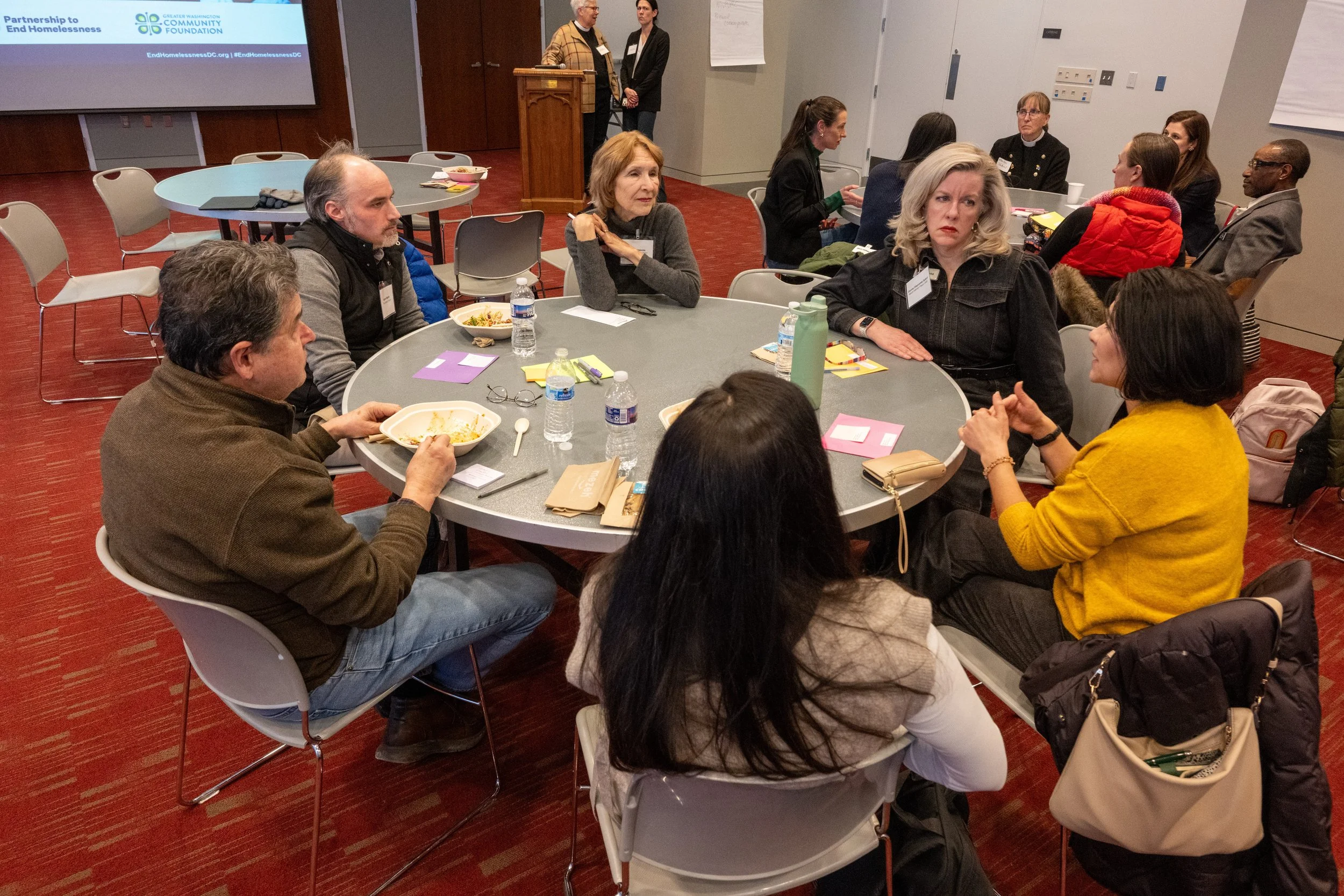
The gathering closed with a commissioning — a reminder that none of this work is meant to be carried alone. The Rev. Linda Kaufman sent participants out with a powerful blessing adapted from Janet Morley:
And now may the God who dances in creation,Who embraces us with human love,Who shakes our lives like thunder,Bless us and drive us out from this placeTo fill the world with justice.
Every congregation has something to offer: presence, space, voice, resources — they matter. The work of ending homelessness is not good to do alone. But together — by faith — we can.
Get Involved
To learn more or connect with the Partnership to End Homelessness, reach out to Jennifer Olney at [email protected] . For more on faith communities working together to end homelessness, contact the Rev. Linda M. Kaufman at [email protected].
To join the advocacy movement, visit The Way Home Campaign at thewayhomedc.org or the Washington Interfaith Network at WINDC.org.